At a glance
- Anglicans came to Virginia in 1607, but the colonial church never had a bishop of its own. Lay vestries ran the parishes.
- After the Revolution, Samuel Seabury was consecrated by Scottish bishops in 1784. William White and Samuel Provoost were consecrated at Lambeth Palace in 1787.
- The General Convention of 1789 gave the church a constitution, with bishops, clergy and lay people governing together, and its first American Prayer Book.
- Thomas John Claggett, first Bishop of Maryland (1792), was the first bishop consecrated in America. Christ Church was founded in his successor's diocese in 1817.
- Today the Episcopal Church is one of the churches of the worldwide Anglican Communion; Christ Church belongs to the Diocese of Washington (1895).
Christ Church was founded in 1817, only thirty years after the Episcopal Church had its first bishops. This page tells how the Church of England in the American colonies became an independent church, Anglican in its worship and its ministry but American in its government, and how that church grew into the Episcopal Church we belong to today. The story of how the Anglican tradition itself took shape in England is on the previous page.
The colonial church
The Church of England arrived with the first permanent English settlement, at Jamestown in 1607. It became the established (tax-supported) church of Virginia, and later of Maryland, the Carolinas, Georgia and parts of New York. Our own corner of the world was then Maryland: Georgetown was laid out as a Maryland tobacco port in 1751. Elsewhere, especially in New England, Anglicans were a minority among Congregationalists, Quakers and others.
The colonial church had one great weakness: it had no bishop. Oversight belonged, at a distance, to the Bishop of London. Anyone wishing to be ordained had to make the long and dangerous voyage to England, and no one in America could be confirmed. Proposals to send a bishop to the colonies were bitterly opposed by many colonists, who associated bishops with royal power. In practice, parishes were run by their lay vestries, a habit of lay leadership that has marked the Episcopal Church ever since. Missionary clergy were supported by the Society for the Propagation of the Gospel (founded 1701).
The crisis of the Revolution
The Revolution was a crisis for colonial Anglicans. At their ordination the clergy had sworn allegiance to the king, and the Prayer Book services included prayers for him. Many clergy, especially in the North, remained loyal to the Crown and left for England or Canada; many churches closed. Yet a large share of the Revolution's leaders were themselves Anglicans: George Washington was a vestryman in Virginia, and a majority of the signers of the Declaration of Independence belonged, at least nominally, to the Church of England. After independence the church in America had to answer an urgent question: how could it remain a church with bishops, in the ancient succession, without a king and without the Church of England's help?
Two paths to the first bishops
Connecticut and Scotland. In 1783 the clergy of Connecticut chose Samuel Seabury as their bishop and sent him to England to be consecrated. The English bishops could not do it: the law required every new bishop to swear allegiance to the king. Seabury turned to the bishops of the small Scottish Episcopal Church, who had no ties to the state (they had refused to accept the Hanoverian kings). On 14 November 1784, in Aberdeen, three Scottish bishops consecrated him, and he became the first bishop of the Anglican tradition outside the British Isles. In a concordat signed the next day, Seabury promised to commend to the American church the Scottish form of the Communion prayer, with its ancient prayer of offering and its invocation of the Holy Spirit. American Prayer Books have followed that pattern ever since.
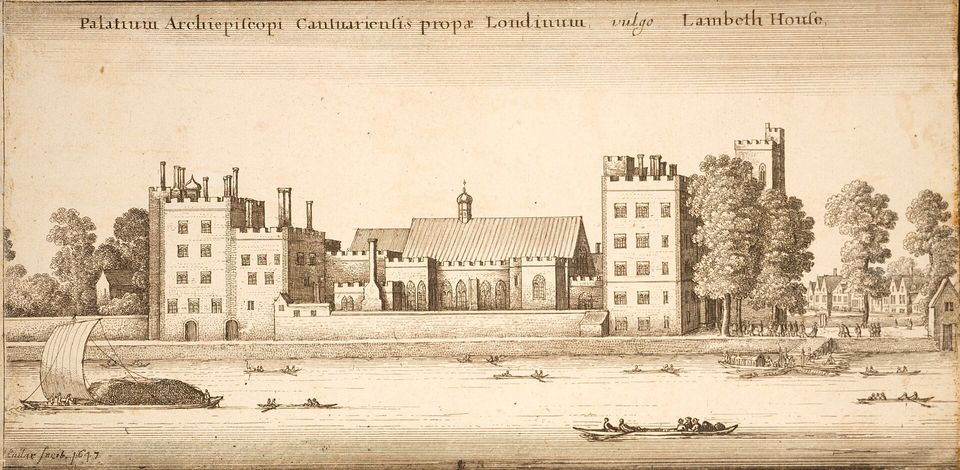
Philadelphia, New York and Lambeth. In the middle states the leader was William White, rector of Christ Church, Philadelphia, and chaplain to the Continental Congress. His pamphlet The Case of the Episcopal Churches in the United States Considered (1782) proposed a church governed by representatives of clergy and laity together, meeting in conventions. Parliament changed the law in 1786 to allow the consecration of bishops for foreign countries without the oath. On 4 February 1787, in the chapel of Lambeth Palace, the Archbishop of Canterbury, the Archbishop of York and two other bishops consecrated White as Bishop of Pennsylvania and Samuel Provoost as Bishop of New York. James Madison, cousin of the future president, was consecrated for Virginia in 1790. With three bishops of the English line, the American church could now consecrate bishops of its own. The first bishop consecrated on American soil, in 1792, was Thomas John Claggett, the first Bishop of Maryland, whose diocese then included Georgetown.
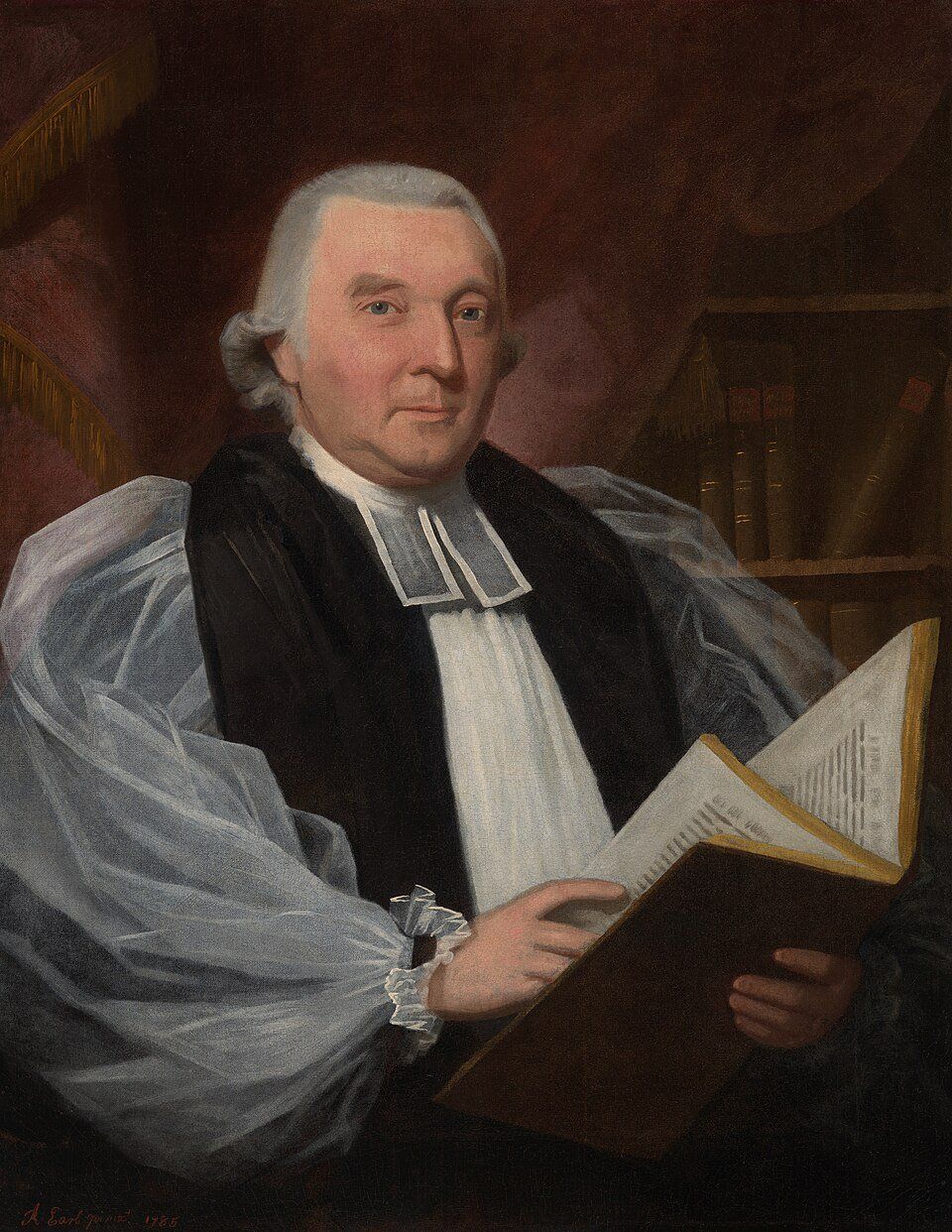
Samuel Seabury (1729–1796)
Bishop of Connecticut, consecrated in Aberdeen in 1784.
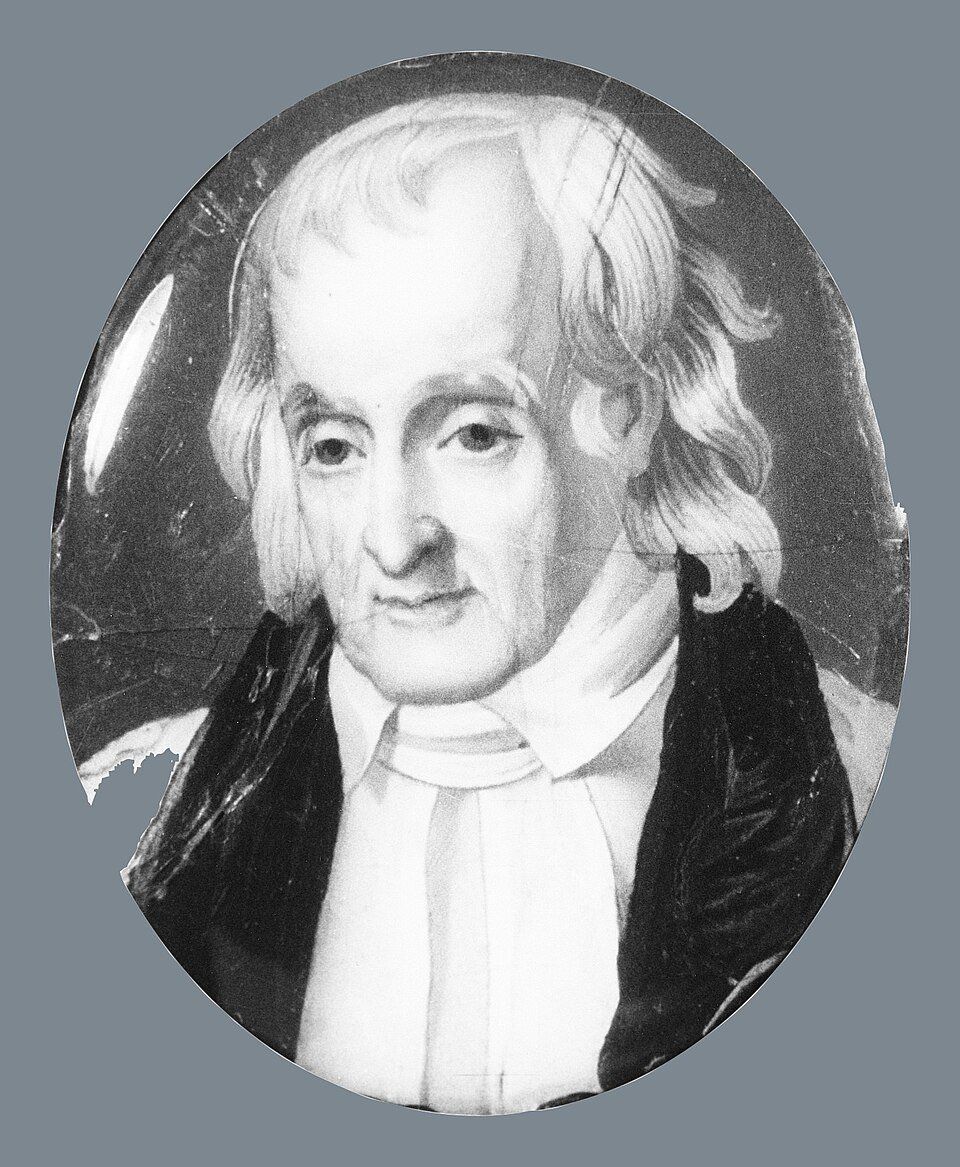
William White (1748–1836)
Bishop of Pennsylvania; chief architect of the church's constitution.
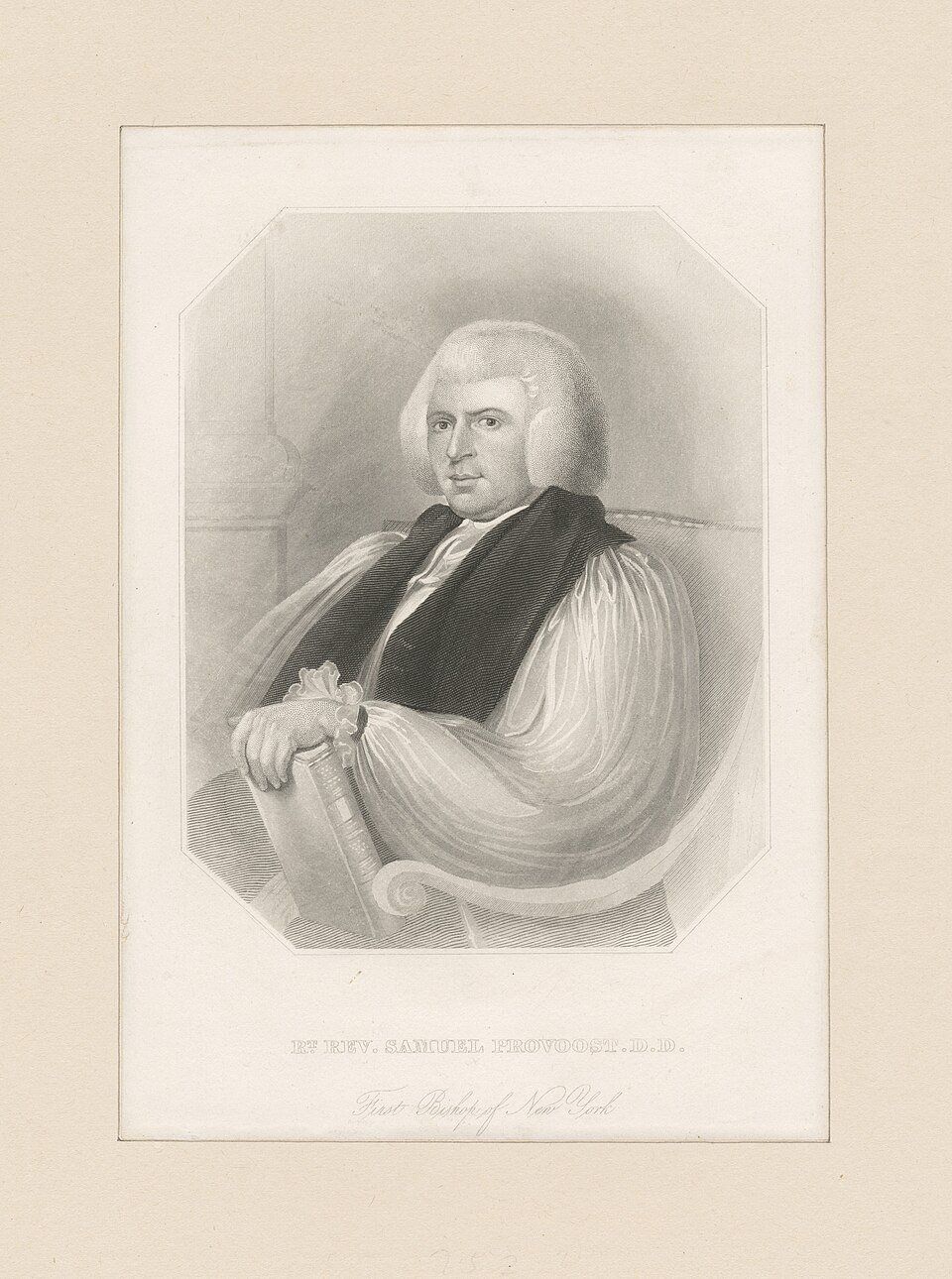
Samuel Provoost (1742–1815)
Bishop of New York, consecrated with White at Lambeth in 1787.
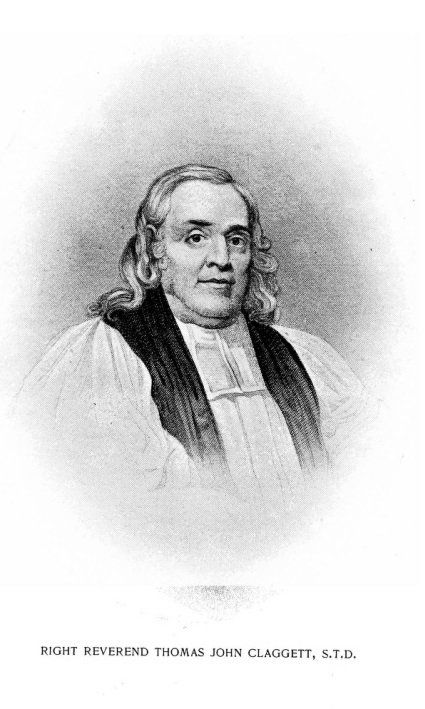
Thomas John Claggett (1743–1816)
First Bishop of Maryland, the first bishop consecrated in America.
1789: a constitution and a Prayer Book
The first General Convention met in 1785, without the New England churches. The two streams came together at the General Convention of 1789 in Philadelphia. The convention adopted a constitution for the whole church, with a House of Bishops and a House of Deputies of clergy and lay people, a pattern of shared government still unusual among churches with bishops. It also adopted the first American Book of Common Prayer, revised from the English book of 1662, which came into use in 1790. Prayers for the king became prayers for the President and civil rulers, and the Communion prayer followed the Scottish pattern that Seabury had promised. The Preface explained that "this Church is far from intending to depart from the Church of England in any essential point of doctrine, discipline, or worship; or further than local circumstances require." The same Preface is printed in our Prayer Book today.
The church's official name, the Protestant Episcopal Church in the United States of America, was first used by Maryland Anglicans meeting at Chestertown in 1780. "Protestant" distinguished it from the Roman Catholic Church; "Episcopal" (from the Greek episkopos, "bishop") from the Congregational and Presbyterian churches. The shorter name, the Episcopal Church, was long in everyday use and was adopted by the General Convention of 1967 as an official alternative.
Growth, division and renewal
The young church grew slowly at first, then steadily. Bishops such as John Henry Hobart of New York (a confident High Churchman) and leaders in Virginia (evangelicals, who founded the Virginia Theological Seminary in 1823) gave it two characteristic accents, discussed on our via media page. Francis Scott Key, one of Christ Church's founders, was an active evangelical layman in exactly these debates: see our parish history. In 1802 Absalom Jones of Philadelphia became the church's first Black priest. In 1835 the church declared that every member was, by baptism, a member of its missionary society, and sent missionary bishops west.
During the Civil War the dioceses of the seceding states formed a separate church. The northern church kept calling their names at General Convention, and in 1865 the southern dioceses returned. Unlike several other American churches, the Episcopal Church did not divide permanently.
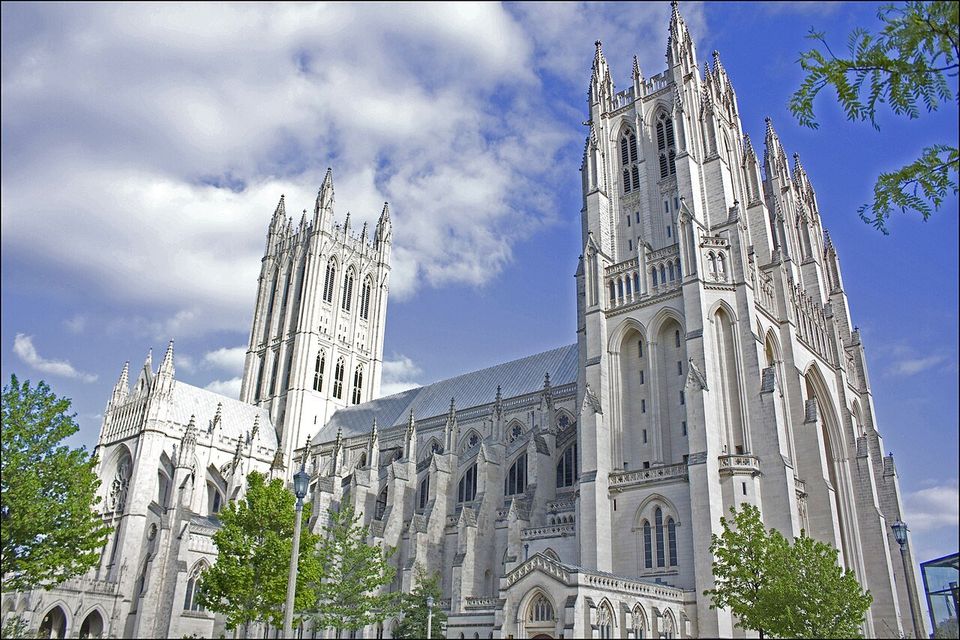
The Diocese of Washington was formed from the Diocese of Maryland in 1895, and Christ Church became one of its parishes. Its cathedral, Washington National Cathedral, was chartered by Congress in 1893; the foundation stone was laid in 1907 in the presence of President Theodore Roosevelt, and the building was completed in 1990, eighty-three years later.
The twentieth century brought new Prayer Books in 1928 and 1979, and The Hymnal 1982. The 1979 book restored the Eucharist as the principal Sunday service, recovered early-church patterns for Baptism, and offered services in both traditional (Rite One) and contemporary (Rite Two) language; Christ Church uses both every Sunday. The church began ordaining women as priests and bishops after the General Convention of 1976. These changes were debated, sometimes painfully, and the Episcopal Church today includes people who see them differently, a fact our own parish's mission speaks to when it describes "a fellowship that respects their views, as well as those of people who see things differently."
The Anglican Communion today
The Episcopal Church is one of the self-governing churches of the Anglican Communion, a worldwide fellowship of churches in communion with the Archbishop of Canterbury. The bishops of the Communion first met at the Lambeth Conference of 1867, and today the Communion's 42 member churches span more than 165 countries, and a large share of the world's Anglicans live in Africa. The Communion has no central government: its churches are held together by shared history, the Prayer Book tradition, the historic episcopate and the four principles of the Chicago–Lambeth Quadrilateral.
The Episcopal Church itself has about 1.5 million members in more than 20 countries and territories. It is led by a Presiding Bishop and governed by its General Convention.
Sources
- Robert W. Prichard, A History of the Episcopal Church, 3rd revised ed. (Morehouse Publishing, 2014).
- David Hein and Gardiner H. Shattuck Jr., The Episcopalians (Church Publishing, 2004).
- "Episcopal Church, The": An Episcopal Dictionary of the Church; Who we are (The Episcopal Church).
- Seabury's consecration and the Concordat of 15 November 1784: Registry of ordinations (1882 reprint) and W. S. Perry, discourse of 1884, Project Canterbury; E. E. Beardsley, Life and Correspondence of Samuel Seabury (1881): Internet Archive.
- The consecrations at Lambeth, 4 February 1787: H. C. Potter, address of 1887, Project Canterbury; the Act of 1786 (26 Geo. 3 c. 84): statutes.org.uk.
- The 1789 Book of Common Prayer and its Preface: justus.anglican.org; the Preface also appears in The Book of Common Prayer (1979), pp. 10–11.
- Washington National Cathedral: history and timeline. Episcopal Diocese of Washington: History of EDOW.
- The Anglican Communion: member churches (anglicancommunion.org; our checker was blocked, so the figures were read from its search listing).
Image credits
- Lambeth Palace, etching by Wenceslaus Hollar, 1647, Thomas Fisher Rare Book Library, University of Toronto (top of page): Wikimedia Commons, public domain.
- Samuel Seabury, Ralph Earl, 1785, National Portrait Gallery, Smithsonian Institution: Wikimedia Commons, public domain.
- William White, miniature by William Russell Birch, c. 1830, Metropolitan Museum of Art: Wikimedia Commons, CC0.
- Samuel Provoost, engraved portrait, New York Public Library, Emmet Collection: Wikimedia Commons, public domain.
- Thomas John Claggett, engraving from W. S. Perry, The Bishops of the American Church (1897): Wikimedia Commons, public domain.
- Washington National Cathedral: Siubo11A, 2010, Wikimedia Commons, CC BY-SA 3.0.


