At a glance
- The Church of England broke with Rome in the 1530s, under Henry VIII, over the king's marriage. At first its doctrine changed little.
- Thomas Cranmer's Book of Common Prayer (1549, revised 1552) put the whole of worship into English: "common" prayer for everyone.
- After the Catholic restoration under Mary I, the Elizabethan Settlement of 1559 joined a Reformed faith to the ancient shape of the Church, with bishops, creeds and liturgy.
- The Thirty-Nine Articles (1563/1571) and the 1662 Prayer Book gave the Church of England its lasting form.
- That church crossed the Atlantic with the colonists, and Georgetown began as part of Maryland's Anglican world.
The Episcopal Church belongs to a family of churches that grew out of the Church of England. Its worship, its Prayer Book and much of its character were shaped in England over roughly 130 years, from the 1530s to the 1660s. This page tells that story briefly. It is history, told as fairly as we can, not an argument: Christians of good faith have read these events very differently, and Roman Catholic, Reformed and Anglican historians all have something to teach us about them.
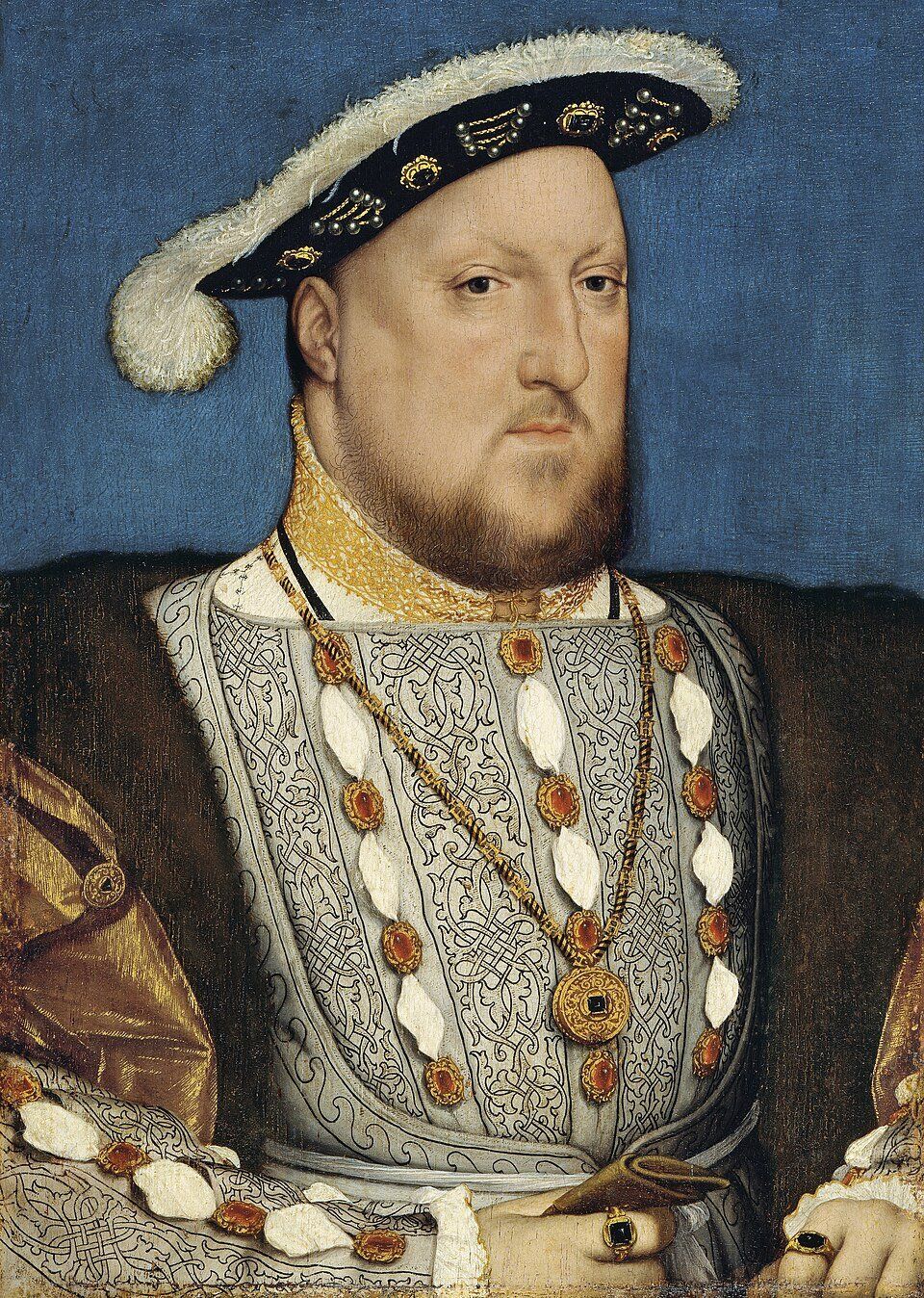
Henry VIII (r. 1509–1547)
Broke with Rome and made himself Supreme Head of the Church of England.
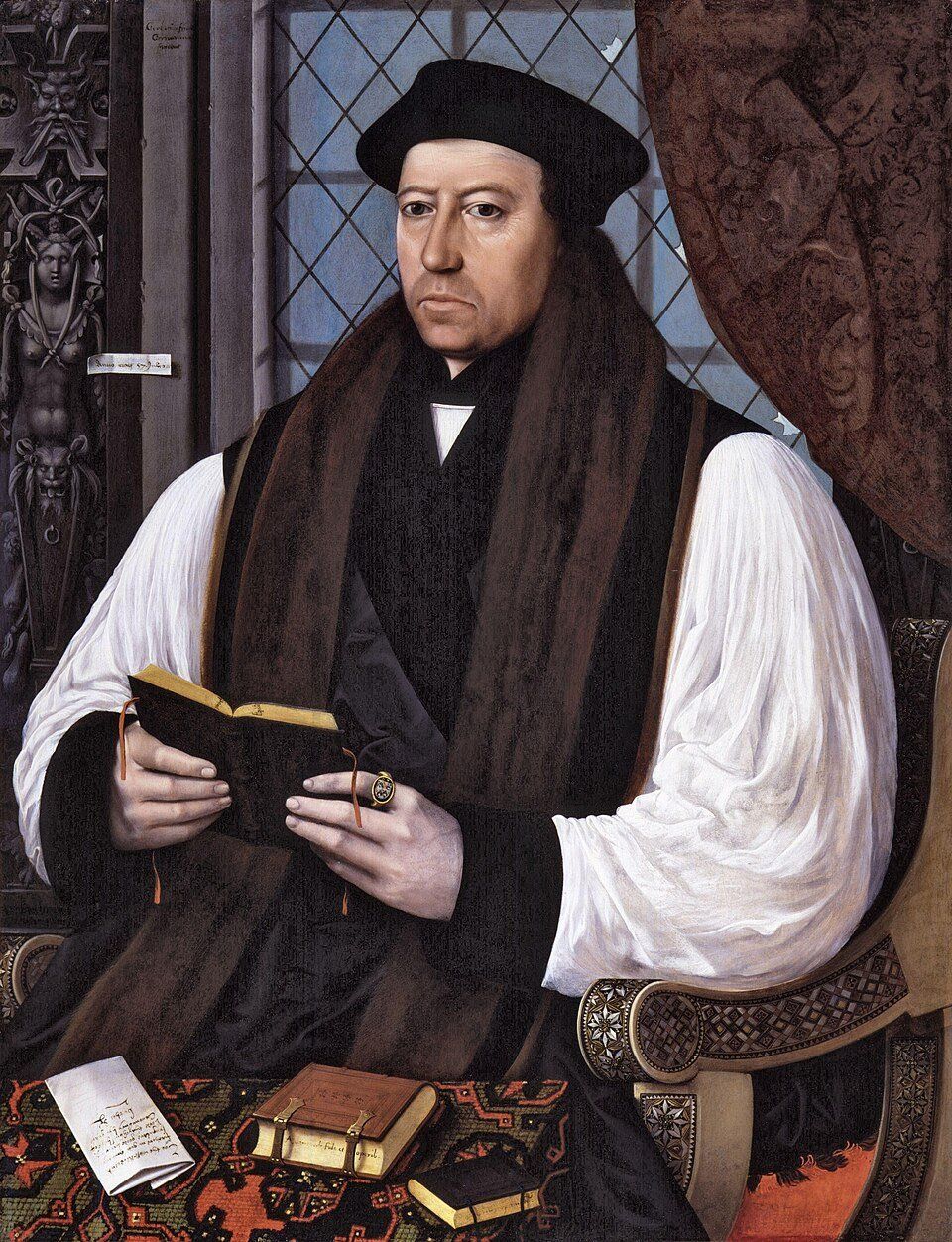
Thomas Cranmer (1489–1556)
Archbishop of Canterbury; author of the first Prayer Books.
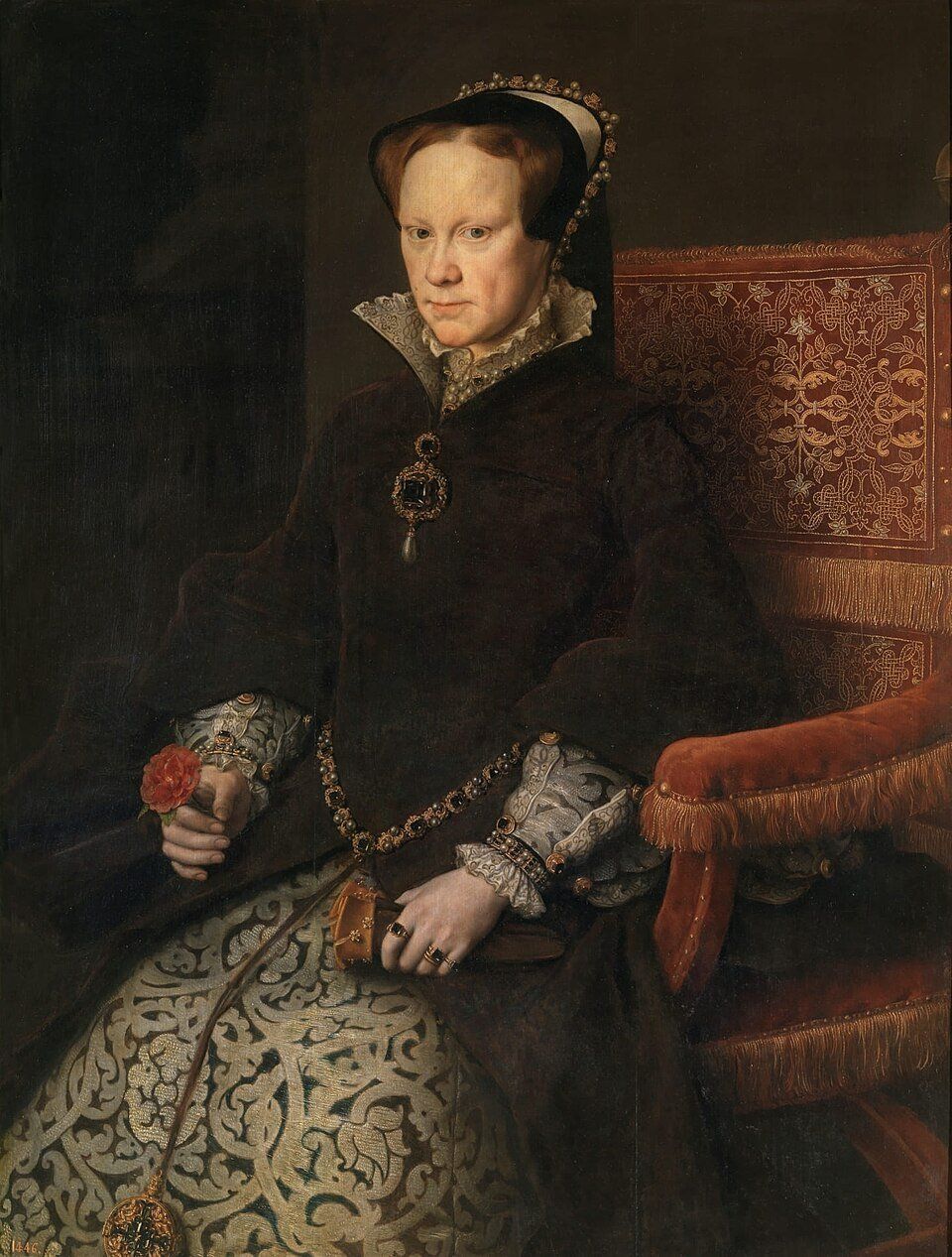
Mary I (r. 1553–1558)
Restored the Latin Mass and the authority of the Pope.
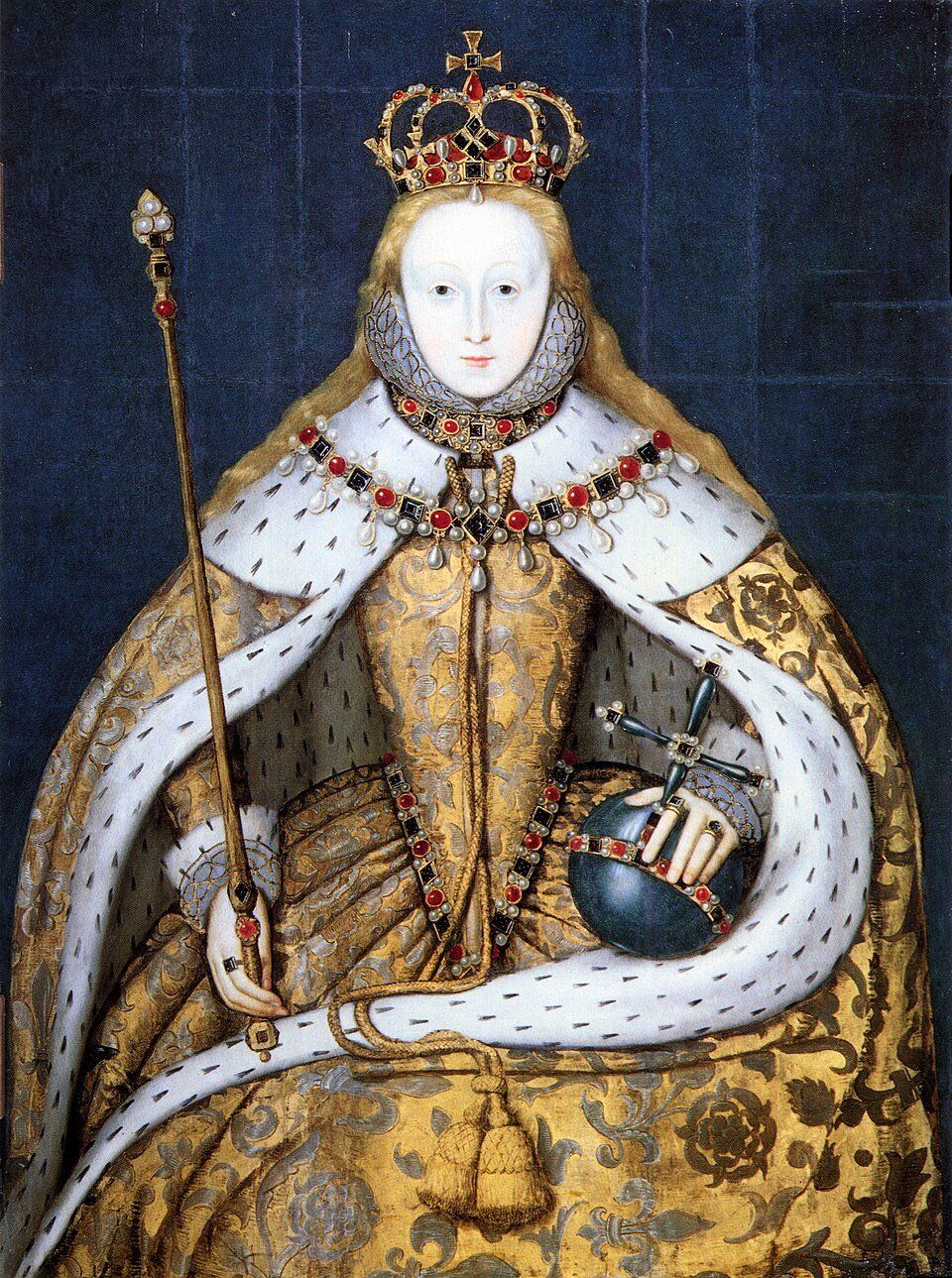
Elizabeth I (r. 1558–1603)
The Settlement of 1559: Supreme Governor, Prayer Book and bishops.
Before the break
Christianity reached Britain in Roman times. In 597 Pope Gregory the Great sent a monk named Augustine to Kent, and he became the first Archbishop of Canterbury. For the next nine centuries the English Church was part of the Western, Latin Church in communion with the Bishop of Rome. It worshipped in Latin, using local forms of the Roman rite (the best known is the "Use of Sarum", from Salisbury), and it was rich in parish life, devotion and art.
By the early 1500s, reformers across Europe were asking hard questions about authority, grace and worship. Martin Luther's protest began in 1517; in Zurich and later Geneva, Huldrych Zwingli and John Calvin led a more thorough "Reformed" movement. In England these ideas circulated among scholars, but King Henry VIII at first opposed them: the Pope even gave him the title "Defender of the Faith" in 1521 for a book attacking Luther.
Henry VIII and the break with Rome (1529–1547)
The break came over Henry's marriage. Henry wanted his marriage to Catherine of Aragon annulled, chiefly because he had no male heir; the Pope would not grant it. Between 1529 and 1536 Parliament passed a series of laws that cut the English Church's legal ties to Rome. Thomas Cranmer, made Archbishop of Canterbury in 1533, declared the marriage void. The Act of Supremacy (1534) recognised the king as Supreme Head of the Church of England. The monasteries were dissolved between 1536 and 1540, and their wealth passed to the Crown.
Henry's church was not Protestant in any full sense. He kept the Latin Mass, clerical celibacy and most traditional doctrine, and he punished both Protestants and those loyal to the Pope. Two lasting changes did come in his reign, both largely Cranmer's work: an English Bible was placed in every parish church (the Great Bible, 1539), and the first official service in English, the Litany, appeared in 1544. It is still in our Prayer Book.
Edward VI and Cranmer's Prayer Books (1547–1553)
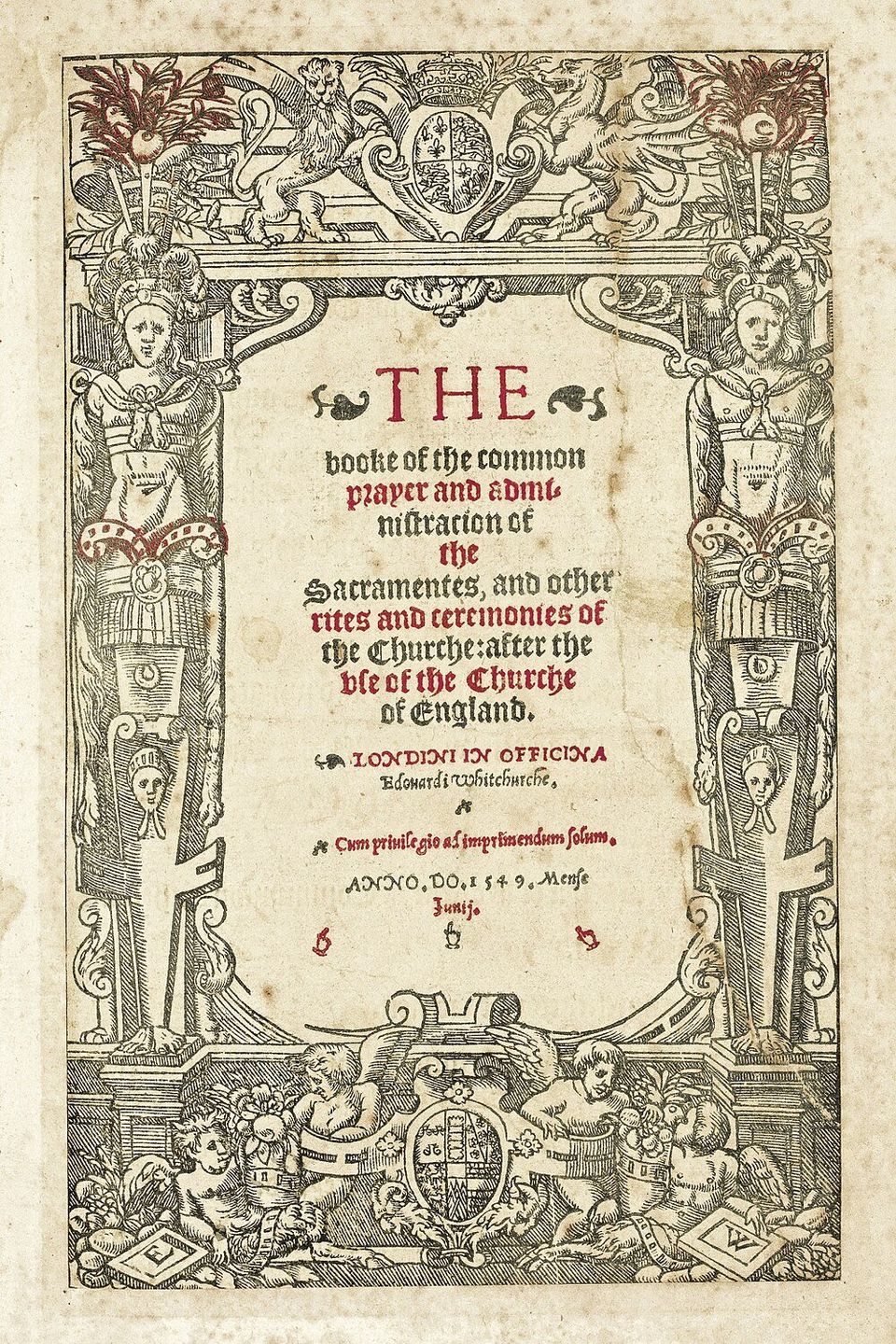
Under Henry's young son, Edward VI, the Reformation in England moved quickly. Cranmer's great achievement was the Book of Common Prayer of 1549: one book, in English, for the whole realm, containing the daily services of Morning and Evening Prayer, the Holy Communion, Baptism, Confirmation, Marriage, the Burial of the Dead and the Psalms. It drew deeply on the old Latin services, on the early Church and on Lutheran models, and its English prose has shaped the language ever since. Its title promised "common" prayer: the same words in every parish, said aloud so that the people could understand and take part.
A second, more clearly Protestant Prayer Book followed in 1552, shaped by Reformed theologians such as Martin Bucer and Peter Martyr Vermigli, who were then teaching in Cambridge and Oxford. Many traditional vestments and ceremonies were removed, and the Communion service was rearranged. In 1553 Cranmer also issued Forty-Two Articles of religion, a summary of doctrine.
Mary I (1553–1558)
Edward died at fifteen in 1553. His half-sister Mary, Catherine of Aragon's daughter and a devout Catholic, restored the Latin Mass and the authority of the Pope. Historians now emphasise how much traditional religion was still loved in many parishes and how quickly it revived. But Mary's reign is also remembered for the burning of about 280 Protestants for heresy. Cranmer was among them: after recanting under pressure, he withdrew his recantations and was burned at Oxford in 1556. Hundreds of English Protestants went into exile in Frankfurt, Strasbourg, Zurich and Geneva, and came home after Mary's death with Reformed ideas of their own.
The Elizabethan Settlement (1559)
Elizabeth I, daughter of Henry VIII and Anne Boleyn, came to the throne in November 1558. In 1559 Parliament passed a new Act of Supremacy, making her "Supreme Governor" (not "Supreme Head") of the Church of England, and an Act of Uniformity restoring the Prayer Book in a revised form. The 1559 Prayer Book was essentially the 1552 book with some telling changes. At Communion, for example, it joined the words of the 1549 book ("The body of our Lord Jesus Christ, which was given for thee, preserve thy body and soul unto everlasting life") to those of 1552 ("Take and eat this in remembrance that Christ died for thee"), so that worshippers of different convictions could receive the same sacrament with the same words.
This "Elizabethan Settlement" kept bishops, cathedrals, the parish system and much of the ancient shape of worship, while teaching a Reformed doctrine of salvation and authority. Elizabeth was more interested in outward conformity and public order than in examining private belief. The Settlement satisfied neither those who remained loyal to Rome (Pope Pius V excommunicated the queen in 1570) nor the "Puritans" who wanted a fuller reformation on the Genevan model. Its critics on both sides are part of the story too.
The Thirty-Nine Articles
In 1563 the Convocation of Canterbury revised Cranmer's articles into the Thirty-Nine Articles of Religion, made binding on the clergy by Parliament in 1571. They are a Reformation-era statement, not a full creed. They teach that Holy Scripture "containeth all things necessary to salvation" (Article VI), affirm the ancient creeds, set out a Protestant account of justification by faith, and reject a number of late-medieval teachings and practices. In several disputed matters they are deliberately brief. The Episcopal Church printed them in a lightly adapted American form in 1801. Today they appear among the "Historical Documents" at the back of our Prayer Book, a witness to our history rather than a test that members must sign.
From the Elizabethans to 1662
During Elizabeth's long reign, writers such as John Jewel and, above all, Richard Hooker began to explain and defend the Church of England's position. Their thought, and the "Caroline divines" of the 1600s who built on it, is the subject of our page on the via media.
Under James I came the Authorised (King James) Version of the Bible in 1611. Under Charles I, Archbishop William Laud's emphasis on order, beauty and reverence in worship met fierce Puritan opposition. In the Civil Wars that followed, Laud and then the king were executed; bishops were abolished and the Prayer Book was banned in 1645. For fifteen years Anglican worship survived only in private homes and in exile.
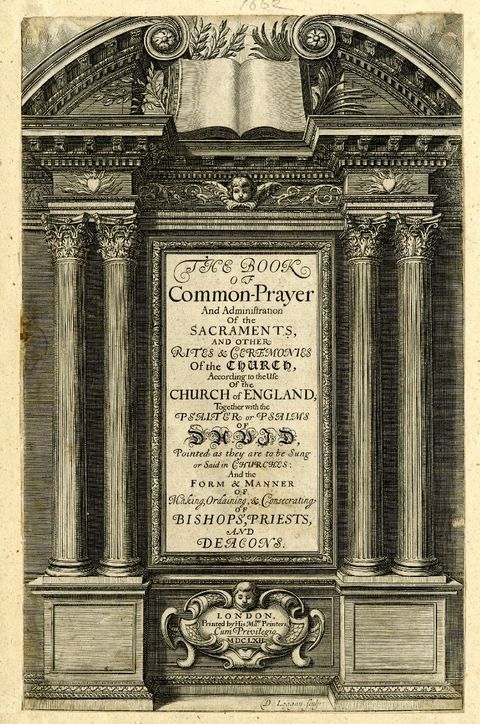
When the monarchy returned in 1660, the Church of England was restored with it. The Book of Common Prayer of 1662, authorised by a new Act of Uniformity, is a careful revision of the Elizabethan book. Its Preface describes the Church of England's long habit "to keep the mean between the two extremes, of too much stiffness in refusing, and of too much easiness in admitting any variation" in its liturgy.
"It hath been the wisdom of the Church of England, ever since the first compiling of her Publick Liturgy, to keep the mean between the two extremes, of too much stiffness in refusing, and of too much easiness in admitting any variation from it." The Preface to the Book of Common Prayer, 1662
The 1662 book remains the official Prayer Book of the Church of England. But its Act of Uniformity also drove some 2,000 ministers who could not accept it out of their parishes (the "Great Ejection"). That deepened the lasting division between the national Church and the Presbyterians, Congregationalists, Baptists and Quakers who became England's "Nonconformists".
A church that travelled
With English trade, colonies and missions, the Church of England spread across the world. Chaplains came to Virginia with the settlers of Jamestown in 1607, and Anglican parishes grew up across the American colonies, particularly in Virginia and Maryland. Georgetown, where our parish stands, began as a Maryland town. The Society for the Propagation of the Gospel, founded in 1701, sent clergy to the colonies and later much further afield. How that colonial church survived the American Revolution and became the Episcopal Church is told on the next page.
Where you meet this history on a Sunday. Christ Church's 8:00 and 11:15 a.m. services use Rite One, the traditional-language form of our Prayer Book, whose prayers descend directly from Cranmer's books. On the second and fourth Sundays the 11:15 service is Morning Prayer, Cranmer's daily office, and Choral Evensong sets his Evening Prayer to the music of the English choral tradition. The Great Litany, the first English service of 1544, is still in the Prayer Book. See Worship services and Music.
Sources
- Diarmaid MacCulloch, Thomas Cranmer: A Life (Yale University Press, 1996).
- Eamon Duffy, The Stripping of the Altars: Traditional Religion in England, c.1400–c.1580 (Yale University Press, 1992; 2nd ed. 2005).
- Alan Jacobs, The Book of Common Prayer: A Biography (Princeton University Press, 2013).
- Mark Chapman, Anglicanism: A Very Short Introduction (Oxford University Press, 2006).
- The texts of the 1549, 1552 and 1559 Prayer Books and the 1544 Litany: The Society of Archbishop Justus.
- The 1662 Prayer Book, its Preface (quoted above) and the Thirty-Nine Articles: The Church of England.
- "Cranmer, Thomas": An Episcopal Dictionary of the Church (The Episcopal Church).
- The Book of Common Prayer (1979), Historical Documents, pp. 867–876 (the Articles of Religion as adopted in 1801).
Image credits
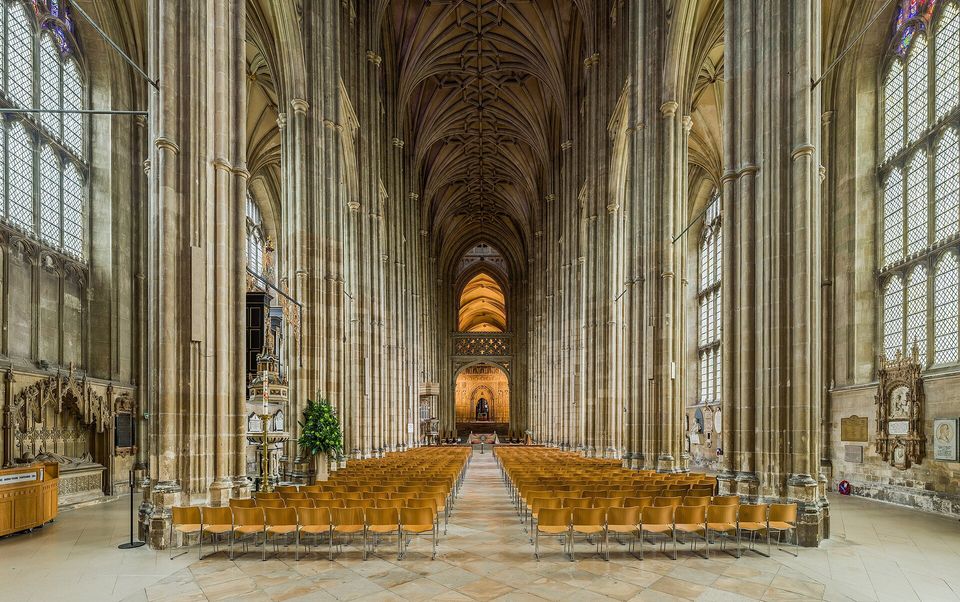
- Nave of Canterbury Cathedral (top of page): Diliff (David Iliffe), 2014, Wikimedia Commons, CC BY-SA 3.0.
- Henry VIII, Hans Holbein the Younger, c. 1537, Museo Nacional Thyssen-Bornemisza: Wikimedia Commons, public domain.
- Thomas Cranmer, Gerlach Flicke, 1545, National Portrait Gallery, London: Wikimedia Commons, public domain.
- Mary I, Antonis Mor, 1554, Museo del Prado: Wikimedia Commons, public domain.
- Elizabeth I in her coronation robes, unknown artist, c. 1600–1610, National Portrait Gallery, London: Wikimedia Commons, public domain.
- Title page of the 1549 Book of Common Prayer, printed by Edward Whitchurch: Wikimedia Commons, public domain.
- Title page of the 1662 Book of Common Prayer, engraved by David Loggan, British Museum: Wikimedia Commons, public domain.
- Prayer Book family tree: diagram by Christ Church, Georgetown.


