At a glance
- Founded 10 November 1817 by members of St. John's, Georgetown, meeting at the house of Thomas Corcoran.
- First church consecrated 30 December 1818 on the same corner, then called Congress and Beall Streets (now 31st and O).
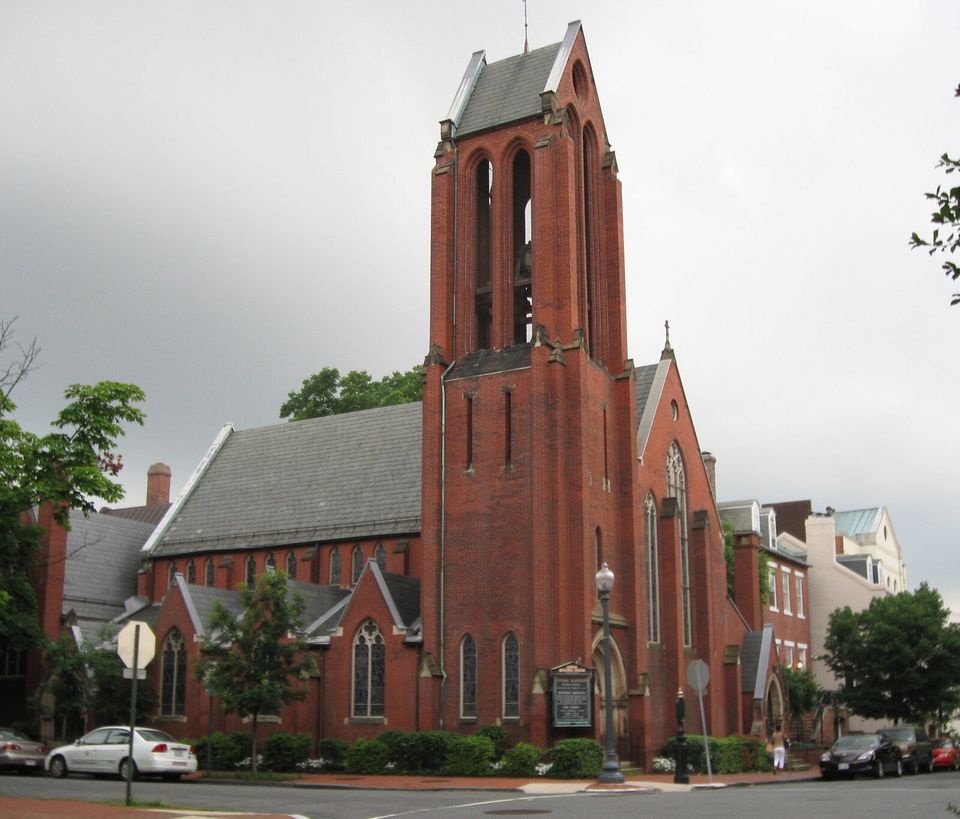
- Present church built 1885–86 to the Gothic Revival design of the Washington firm of Cassell & Laws (Henry Laws), and consecrated on 2 June 1887.
- Windows made in Munich; one of them is a memorial to Francis Scott Key.
- Protected on the DC Inventory of Historic Sites (1964) and the National Register of Historic Places (1972).
- Linthicum Hall, built in 1887 and the parish hall since 1957, reopened in 2025 after a full renovation.
This page is a draft for the parish to review. Every fact comes from a source listed at the end. Where sources disagree, or a story rests only on parish tradition, we say so.
Georgetown before Christ Church
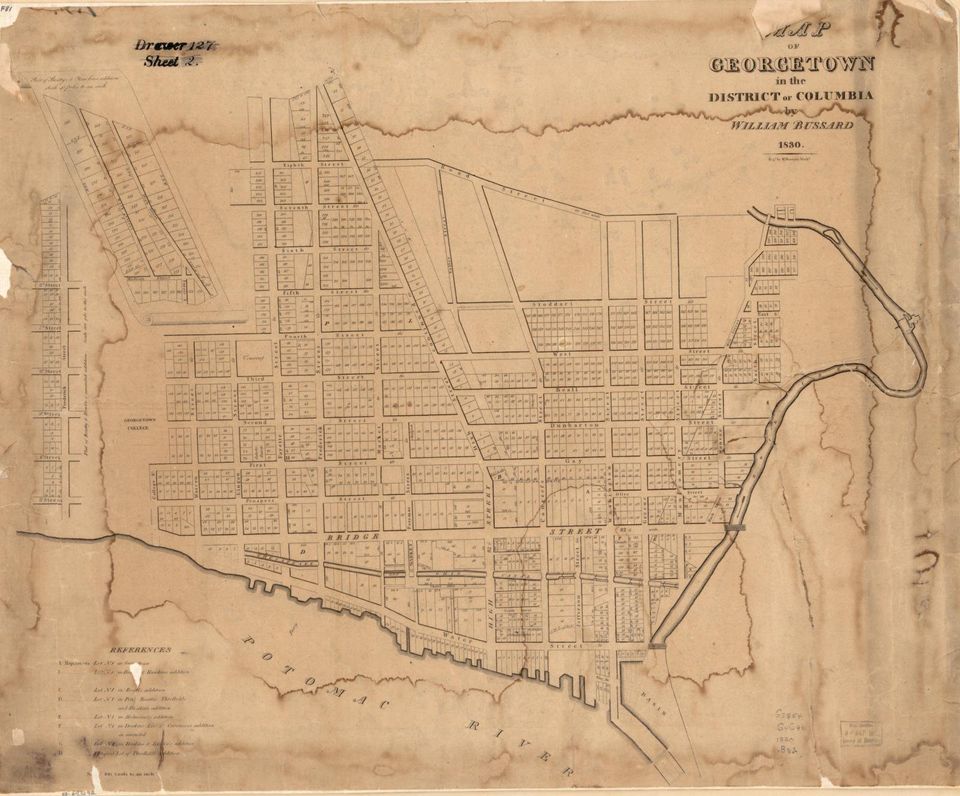
Georgetown is older than Washington. In 1751 the Maryland Assembly authorised a town of sixty acres on the Potomac just above the mouth of Rock Creek, and it grew into a busy port for tobacco and, later, flour. Georgetown was incorporated as a city in 1789 and soon found itself inside the new federal district. It kept its own government until 1871, and its separate legal existence ended in 1895. That is why Washington newspapers of the 1880s, reporting on the building of the present church, called the neighbourhood "West Washington".
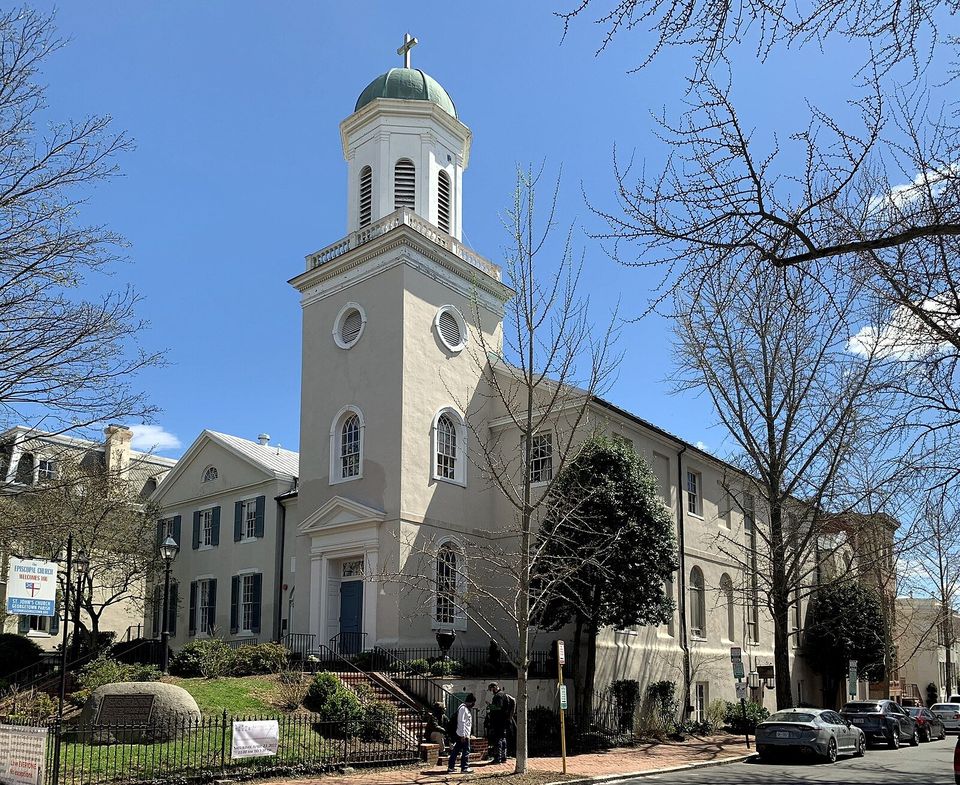
The Anglican parish in town was St. John's, Georgetown, begun in 1796, with an exterior attributed to William Thornton, the first architect of the Capitol. By 1817 St. John's was full: even gallery seats were being rented at high prices. A group of its members decided to found a second parish.
The founding, 1817
On 10 November 1817 a group of laymen met at the house of Thomas Corcoran on Bridge Street (now M Street) and organised Christ Church. Corcoran was a leading Georgetown merchant and the father of the banker and art collector William Wilson Corcoran. The new congregation held its first services on 13 December 1817 in the Lancaster School building on Beall Street. Its first rector was Reuel Keith, who had been assistant at St. John's.
The founders included Clement Smith, John S. Haw, John Myers, Ulysses Ward, James A. Magruder, Thomas Henderson and John Pickrell. Judge James S. Morsell and John Abbott joined them on the first vestry. Twenty-six pew holders signed the original agreement. On 13 April 1818, according to the parish's records, Francis Scott Key opened one of the early organising meetings with prayer.
The first church, 1818
The congregation bought a lot at the corner of Congress and Beall Streets (today's 31st and O Streets), 120 feet along Congress Street and 60 feet along Beall. Building began in May 1818. The cornerstone was laid with Masonic ceremony by Potomac Lodge No. 5. The parish has always given the date as 12 May 1818; the lodge's minutes, as quoted by the Historic American Buildings Survey, point to 11 May. Inside the stone the builders placed a copper plate bearing the date and the name of President James Monroe, with coins of 1817.
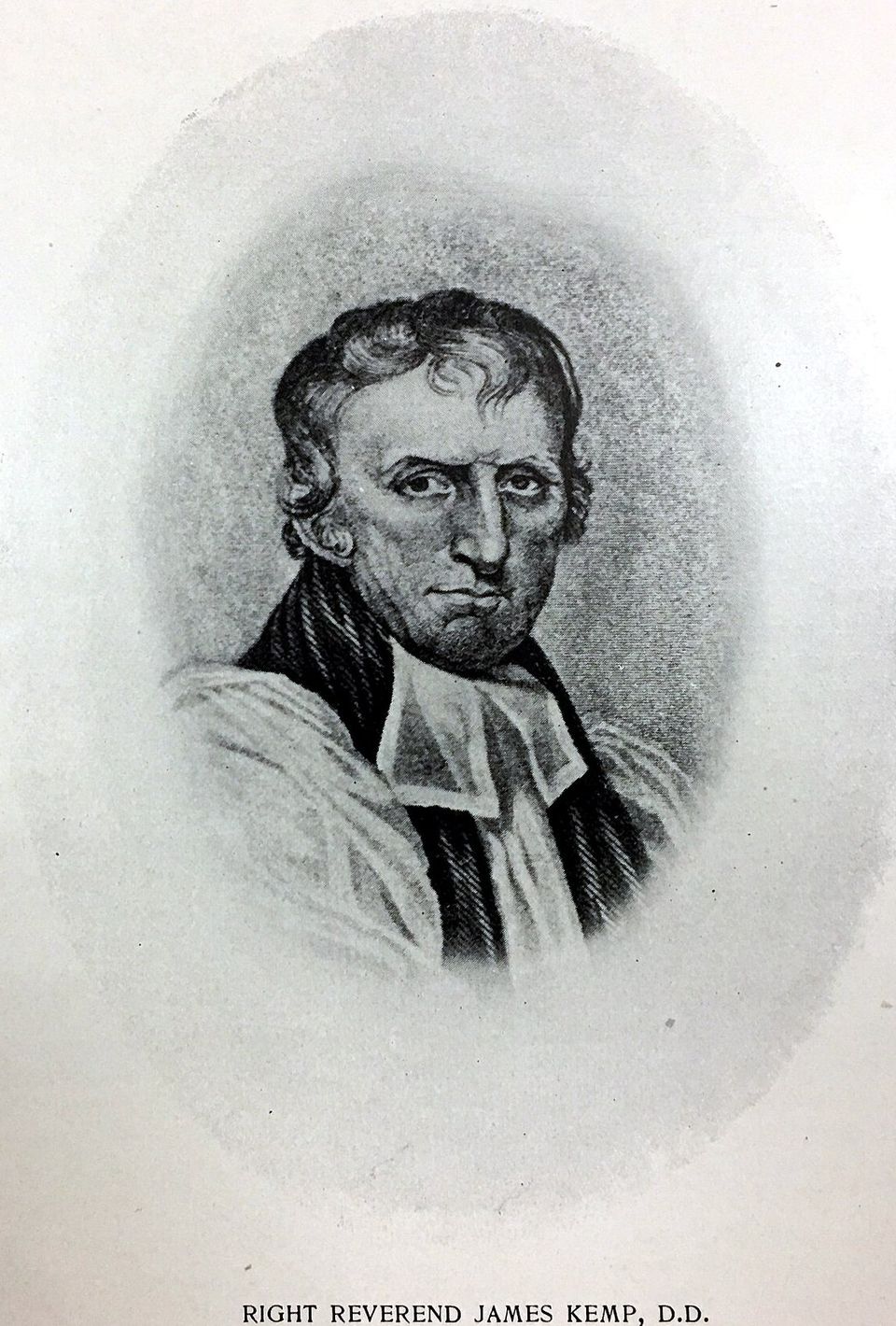
The church was ready by Christmas. The parish records note that "the new congregation assembled in the new church this day at sunrise" on Christmas Day 1818. It was consecrated on 30 December 1818, and it was the first time the name "Christ Church" was used. According to the parish's bicentennial history, the consecrating bishop was James Kemp of Maryland, whose diocese then included Georgetown. It cost $15,952 with the lot, had seventy pews, a central raised pulpit and a gallery, and was said to be the largest Episcopal church in the District.
The building grew with the parish:
- 1835: a steeple in the style of Christopher Wren was added.
- 1853: the interior was remodelled and a larger organ installed.
- 1867: a major enlargement costing $28,000. The worship space was raised to the second floor over a Sunday-school room, and a squat tower replaced the steeple.
- 1873: the city lowered the grades of 31st and O Streets. The church was left perched above the street behind retaining walls and extra steps, which helped bring about its rebuilding. The parish's oral history dates this re-grading to 1865, but the 1969 survey, citing the 1949 parish history, gives 1873.
Early rectors
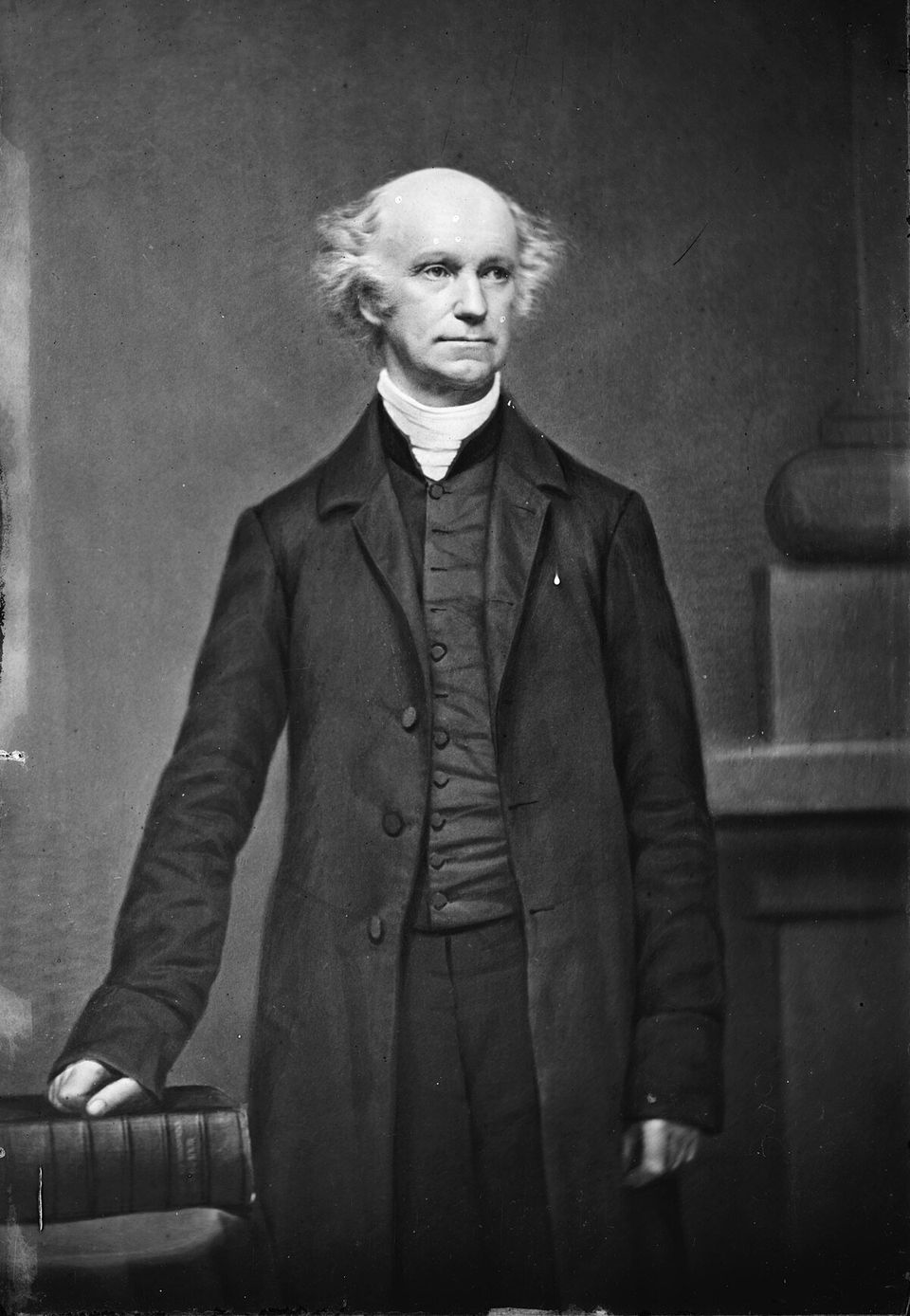
Christ Church's early rectors were a remarkable group. Charles Pettit McIlvaine, rector from 1820, was twice Chaplain of the United States Senate and later, as Bishop of Ohio, one of the leading evangelicals of the Episcopal Church. Philip Slaughter (rector 1835–37) became a noted historian of the Virginia church. In 1847 the pew list included the Russian minister, Baron Alexander de Bodisco, alongside old Georgetown families such as the Addisons, Corcorans, Linthicums, Marburys, Morsells and Ridgelys. In February 1844 the rector, Stephen G. Gassaway, preached a sermon after the explosion aboard USS Princeton, which killed two members of President Tyler's cabinet; it was printed that year as The Voice of the Lord.
The Civil War years
During the Civil War, Washington filled with soldiers and many churches were taken over as hospitals, including several in Georgetown. We found no evidence that Christ Church, Georgetown, was one of them. A "Christ Church Hospital" of June 1862 sometimes linked with ours was in fact Christ Church near the Navy Yard, and the government soon returned it. What the newspapers do record is that in March 1862 the rector, the Rev. Mr. Harris, promptly read Bishop Whittingham's prayer of thanksgiving for Union victories, which three other rectors in the District refused to read. Harris looked after the parish until 1864.
The present church, 1885–1887
By the 1880s the old church, much altered and stranded by the new street levels, no longer served. The last services in it were held in July 1885, and it was taken down. The new church went up on the same corner.
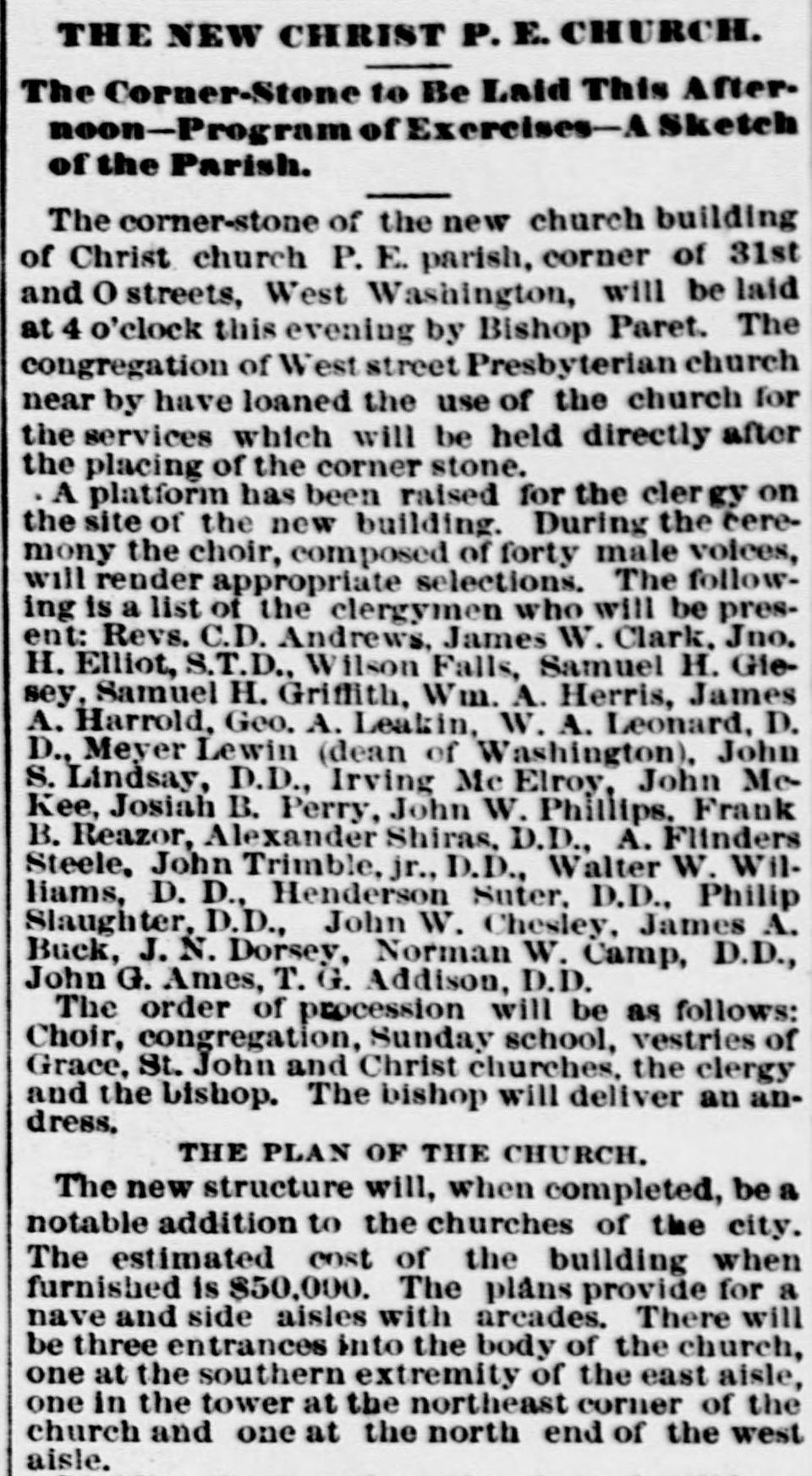
The cornerstone was laid on 1 October 1885 by Bishop William Paret of Maryland. The procession formed at the nearby West Street Presbyterian Church, which had lent its building to the congregation, and a choir of some forty voices sang. That day the Evening Star described the design as "geometrical Gothic", in "dark red brick" with "buff-colored sandstone", and named the architects as "Messrs. Cassel and Law". The Historic American Buildings Survey identifies the firm as Cassell & Laws and the designer as Henry Laws; almost nothing else is known about either partner. The builder was William C. Morrison, and the contract price was $38,300, about $50,000 with furnishings.
"The corner-stone of the new church building of Christ church P. E. parish, corner of 31st and O streets, West Washington, will be laid at 4 o'clock this evening by Bishop Paret." Evening Star, Washington, 1 October 1885
Into the new cornerstone, inscribed with the Chi-Rho and "Christ Church. A.D. 1885.", went everything from the old ones: the 1818 copper plate with Monroe's name, the 1817 coins and the deposits from 1867. With them went a new plate naming President Grover Cleveland, Bishop Paret and the rector, Dr. Albert R. Stuart, together with parish records, the last sermon preached in the old church, photographs of the old building and the day's newspapers. This is the "1885 Time Capsule" remembered in the parish's bicentennial articles.
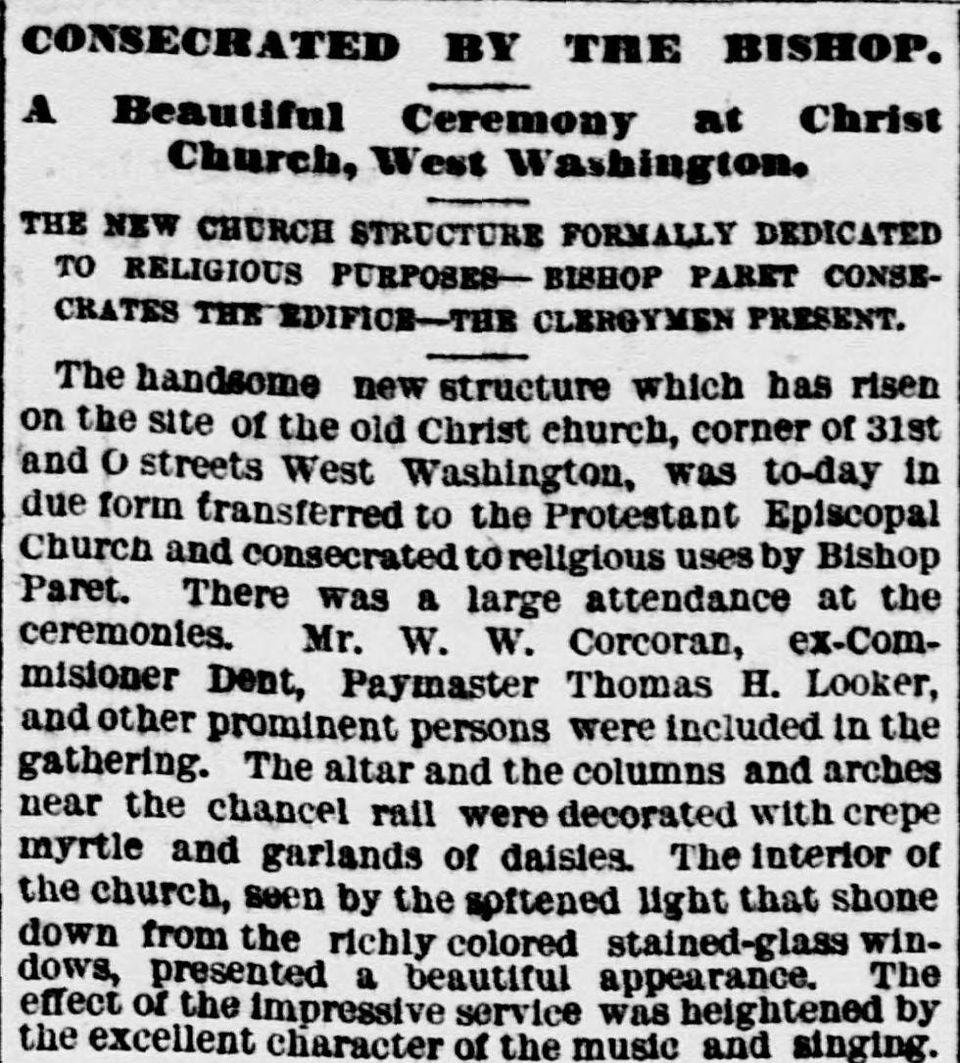
The church was reopened in late October 1886: on 28 October an organ recital by James Butler celebrated "the reopening of the church". It was consecrated on 2 June 1887 by Bishop Paret. Bishop Thomas U. Dudley of Kentucky preached, W. W. Corcoran attended, and so did three former rectors.
The building
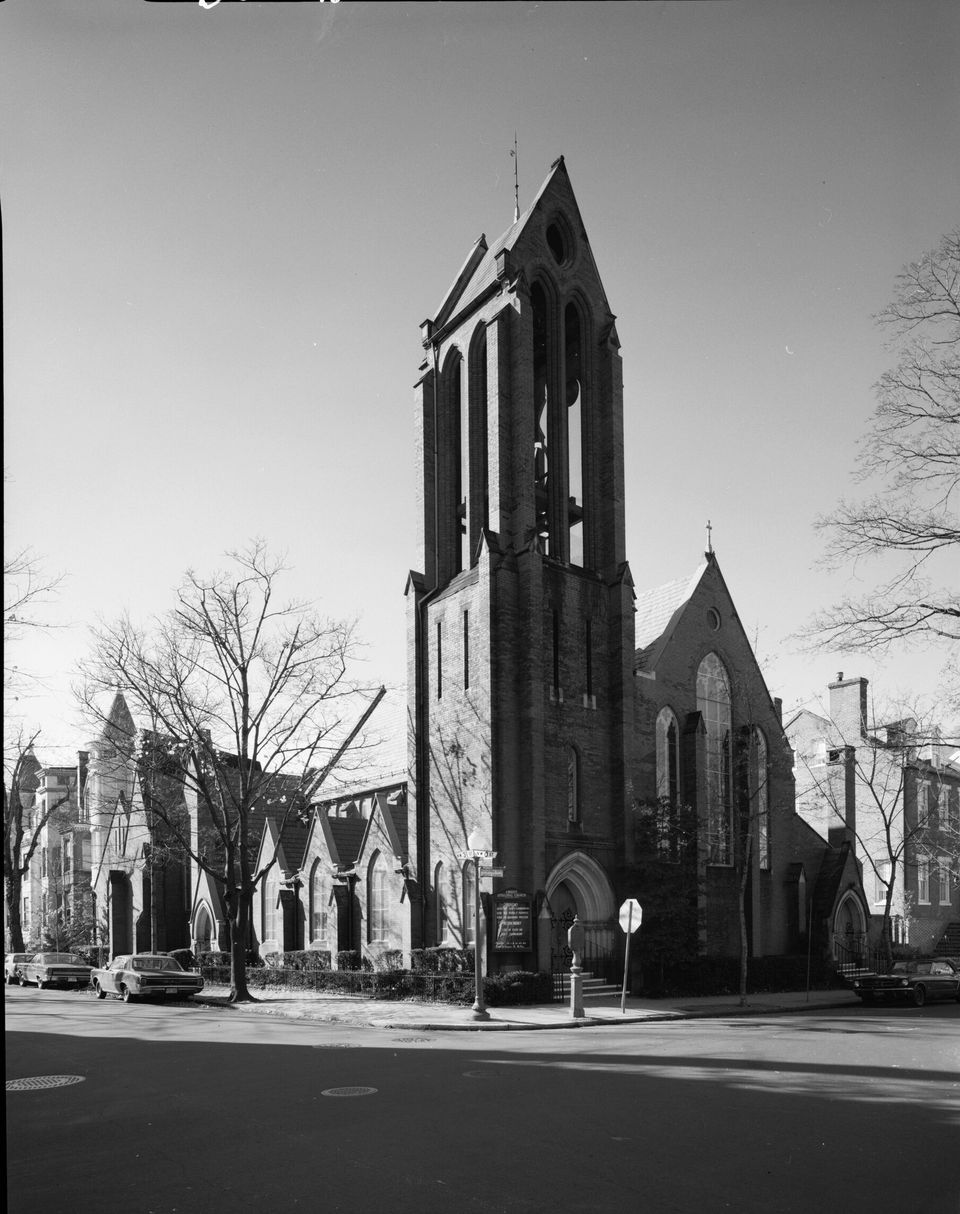
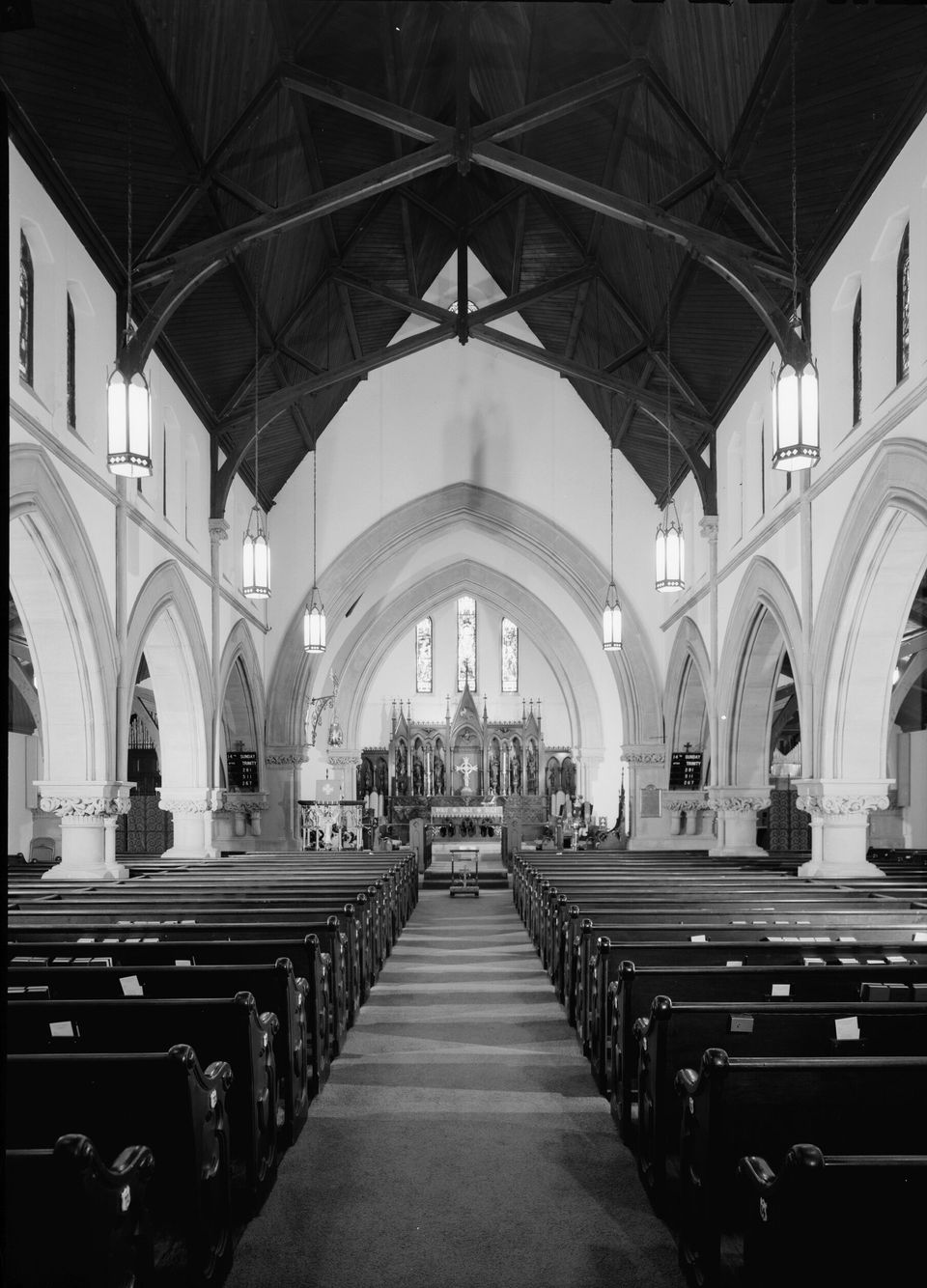
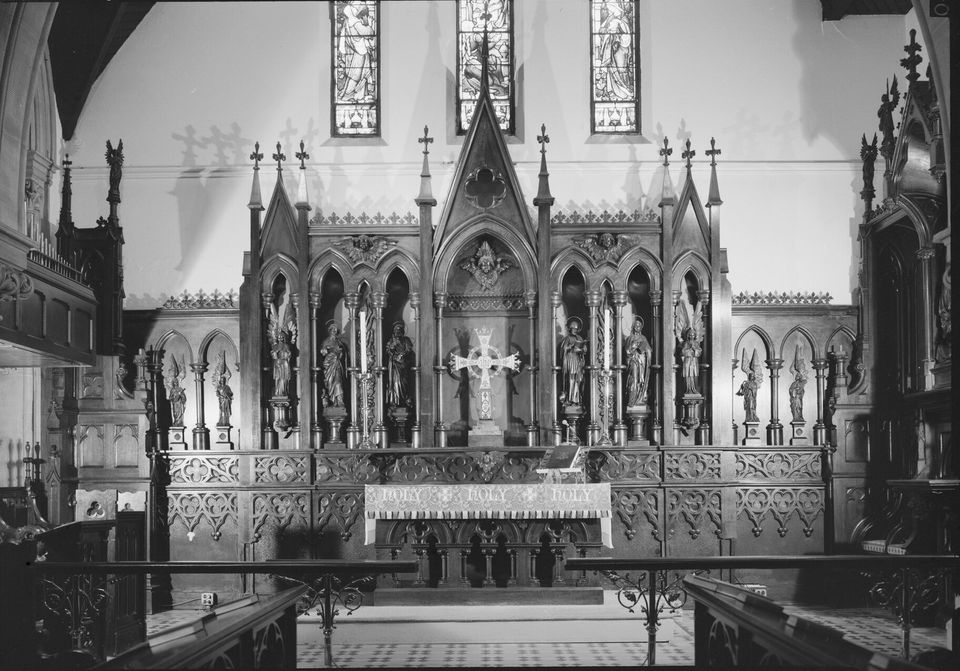
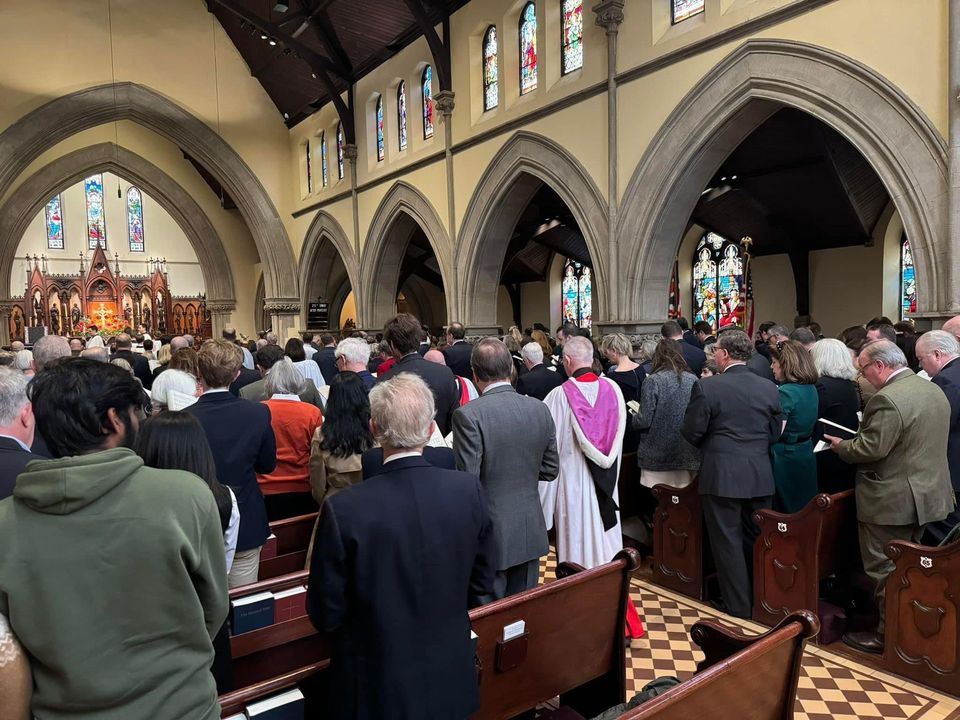
Christ Church is often called a "miniature cathedral". It is built of smooth red pressed brick, trimmed with buff sandstone, under a grey slate roof. A tall tower stands at the northeast corner, at 31st and O, with an open belfry in two stages. Above the door, red terra-cotta panels are patterned with eight-pointed stars. Inside, sandstone arcades on short, sturdy columns with carved capitals divide the nave from the aisles, and an open timber roof rises overhead. The chancel at the south end holds a carved wooden retable with figures of the four Evangelists, Matthew, Mark, Luke and John, and angels at either end. Keith Hall, named for the first rector, adjoins the church to the south.
Later changes, in brief:
- 1911: electric lighting installed.
- 1923: a rector's study, Sunday-school rooms, a kitchen and offices added on the west side.
- 1947: a new organ, dedicated by Paul Callaway, organist of Washington National Cathedral.
- 1959: an electric carillon given to the tower.
- 1967: a chapel built west of the church. According to the parish's oral histories this is the Chapel of St. Jude, given by the family of Mary Weinmann in memory of her mother.
- 1968: at the parish's 150th anniversary, the 1818 cornerstone, inscribed "Christ Church. A.D. 1818.", was set into the west wall of the nave, where it can still be seen.
- About 2003: according to the parish's oral histories, a major restoration of the church under the Rev. Stuart Kenworthy, guided by photographs from 1886. Every stained-glass window was restored, in a project of more than eighteen months.
- 2025: a new organ and sound system installed through the Third Century Campaign.
The windows
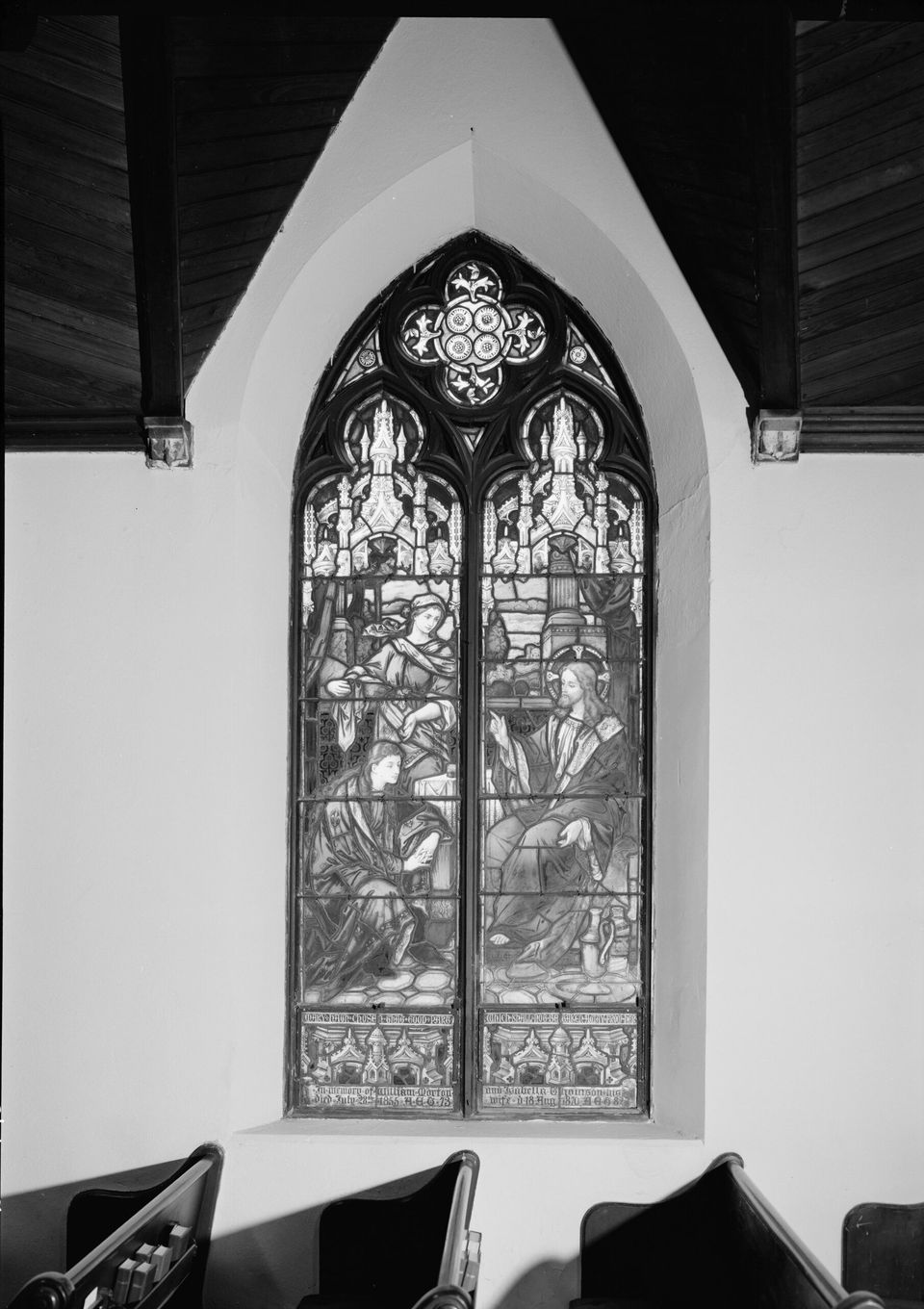
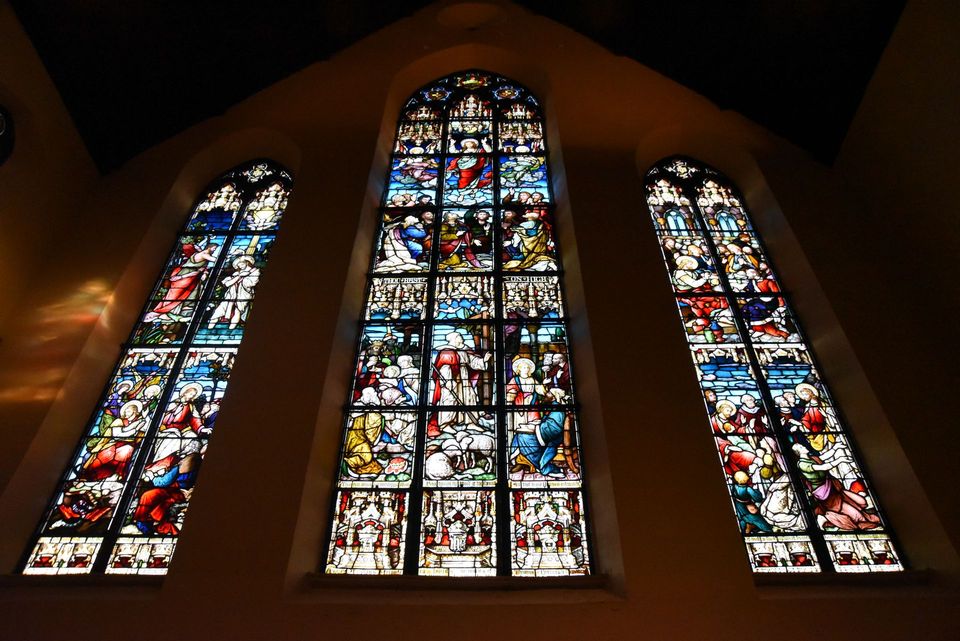
The memorial windows were, in the words of the 1969 survey, "made in Munich, Germany, and installed by German workmen". The studio that made them is not recorded in any source we found. The aisles show scenes from the life of Christ: the Calling of the Brothers, Christ and the Centurion, Christ with Mary and Martha, the Good Shepherd, Christ healing, the Presentation in the Temple, and the Agony in the Garden. That last is the "Gethsemane window" that gives the parish's livestream team its nickname. Old Testament scenes include David playing the harp before Saul, and Ruth and Boaz. The clerestory has apostles, evangelists and angels, and the Aaron, Miriam and Moses window in memory of Francis Scott Key. The great north window over the entrance shows nine scenes from Christ's life, from the Last Supper to the Ascension. Two round windows show the Lamb, at the north end over the door, and the Dove, at the south end above the altar.
A protected landmark
Christ Church was named to the DC Inventory of Historic Sites on 8 November 1964 and listed individually on the National Register of Historic Places on 16 March 1972. It also stands within the Georgetown Historic District, protected by Congress under the Old Georgetown Act of 1950 and designated a National Historic Landmark in 1967. The Historic American Buildings Survey photographed and documented it in 1968–69. The rectory at 3112 O Street is also on the DC Inventory.
The twentieth century
The twentieth-century parish grew with Georgetown itself, which changed from a working-class river town into one of Washington's most sought-after neighbourhoods. When the Episcopal Diocese of Washington was formed from the Diocese of Maryland in 1895, Christ Church became one of its parishes.
The longest rectorship in the parish's history was that of John R. Anschutz (1944–1973), who led Christ Church through the postwar years. His son's recollections in the parish's oral histories include the purchase of Linthicum Hall, a new youth group and the parish's ties to Shrine Mont, the diocesan retreat center. Sanford Garner (1973–1990) later served as interim provost of Washington National Cathedral. The parish's oral histories remember his years for the adoption of the 1979 Prayer Book and the arrival of women among the clergy. Stuart A. Kenworthy (1991–2014), an Army National Guard chaplain who served in Iraq while rector, oversaw the restoration of the church. The Rev. Timothy A. R. Cole, formerly a British Army chaplain, became rector in September 2016.
Linthicum Hall
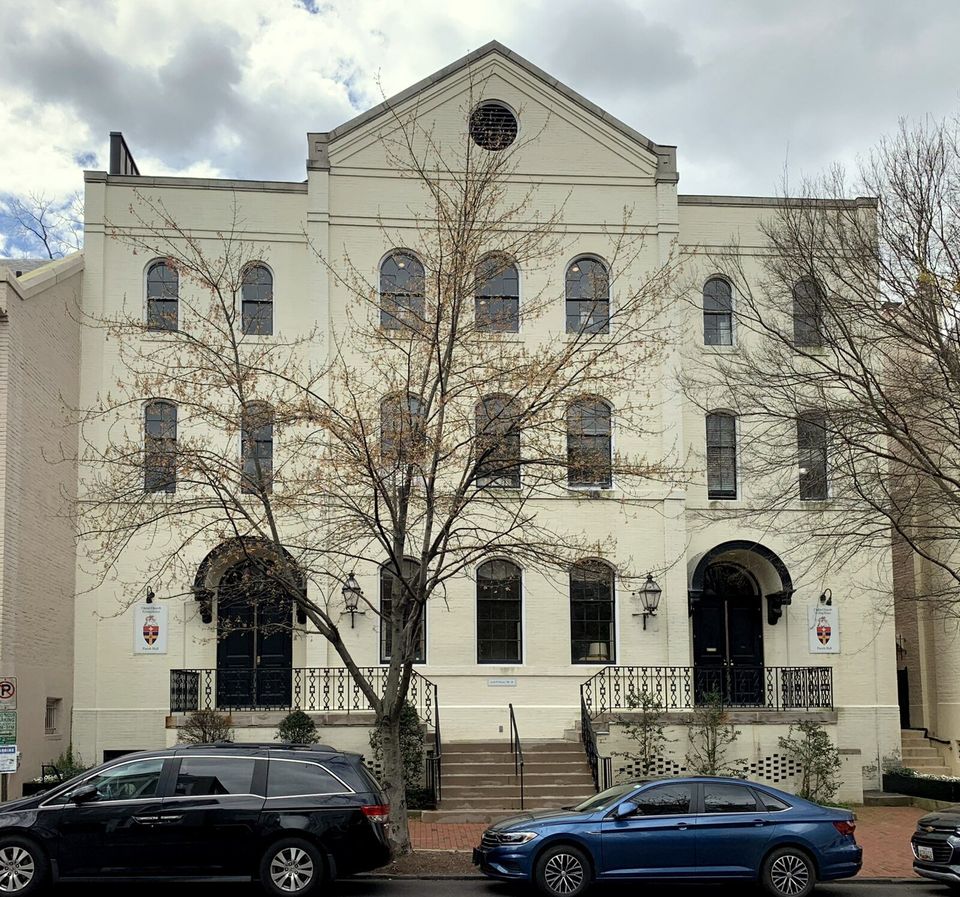
Three doors down O Street stands Linthicum Hall. It was built in 1887 for the Linthicum Institute, a free school founded under the will of the Georgetown merchant Edward Magruder Linthicum. The parish's own history of the building says that he died in 1869 and left $50,000 "for the education and instruction of indigent boys and youth in Georgetown", believing that "knowledge and piety constitute the only assurance of happiness and healthful progress for the human race". The same history records that from 1887 until 1957 the Georgetown Assembly held its annual Christmas dance in the hall.
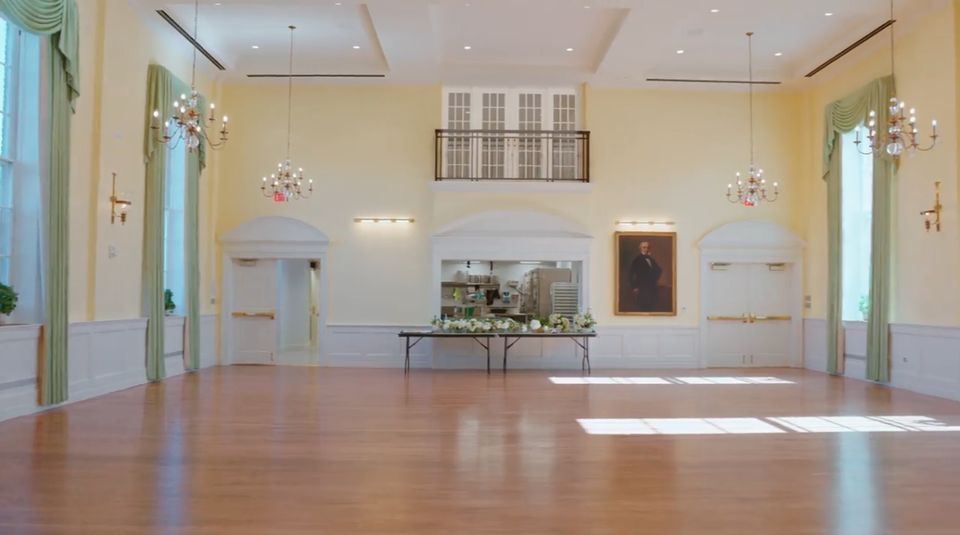
Christ Church bought the building in 1957 as its parish hall and renovated it in 1958. In 2024–25 the parish's Third Century Campaign paid for a complete renovation that kept the historic façade and rebuilt the interior, with an elevator, classrooms, offices, the Thrift Shop and the C. Boyden Gray Auditorium. Linthicum Hall reopened in spring 2025. See the Third Century Campaign and Rentals.
The third century
The parish marked its 200th anniversary with an 18-month celebration from November 2017 to January 2019, described on the Bicentennial page. Its milestones followed the old dates: the founding (10 November 1817), the first cornerstone (12 May 1818) and the first consecration (30 December 1818). Today Christ Church continues the pattern its founders set: daily prayer, the Prayer Book liturgy, fine music and service to its neighbours. See Worship, Music and Outreach.
Rectors of Christ Church
This list follows the Historic American Buildings Survey (1969), which drew on the parish history of 1949. It has been checked against newspaper accounts of 1885 and 1887 and later sources. Years before 1944 are the years each rector began, so an end date is the next rector's start. Interim and assisting clergy are not listed, and the parish archives may correct details.
| Years | Rector |
|---|---|
| 1817–1820 | Reuel Keith |
| 1820–1825 | Charles Pettit McIlvaine (later Bishop of Ohio) |
| 1825–1829 | H. H. Grey |
| 1829–1835 | John Thompson Brooke |
| 1835–1837 | Philip Slaughter |
| 1838–1843 | John F. Hoff |
| 1843–1851 | Stephen G. Gassaway |
| 1851–1854 | David Caldwell |
| 1854–1861 | William Norwood |
| 1862–1864 | William A. Harris (in charge) |
| 1864–1866 | J. H. C. Bonte |
| 1866–1876 | Walter W. Williams |
| 1876–1903 | Albert R. Stuart (rector when the present church was built) |
| 1903–1924 | James H. W. Blake |
| 1924–1930 | E. Pinkney Wroth |
| 1930–1935 | John Temple |
| 1935–1941 | Joseph Gillespie Armstrong |
| 1941–1944 | Peyton R. Williams |
| 1944–1973 | John Raymond Anschutz |
| 1973–1990 | Sanford Garner Jr. |
| 1991–2014 | Stuart A. Kenworthy |
| 2016– | Timothy A. R. Cole |
Sources
- Historic American Buildings Survey, Christ Church, HABS No. DC-243, written data by Ellen J. Schwartz (1969), with photographs of 1968–69: Library of Congress. Public domain.
- Suzanne Ganschinietz, National Register of Historic Places Inventory–Nomination Form, "Christ Church" (1971; listed 16 March 1972, ref. 72001421): National Park Service.
- DC Preservation League, DC Historic Sites: Christ Church, Christ Church Rectory, St. John's Church, Georgetown, Edward Linthicum House.
- National Historic Landmark nomination, Georgetown Historic District (designated 1967): National Park Service.
- Evening Star, 1 October 1885, p. 5, "The New Christ P. E. Church": Chronicling America; National Republican, 2 October 1885, p. 5: Chronicling America; Washington Critic, 4 and 29 October 1886: 4 Oct., 29 Oct.; Evening Star, 2 June 1887, p. 3, "Consecrated by the Bishop": Chronicling America.
- Evening Star, 24 March 1862, p. 3, and 24 June 1862, p. 3; Daily National Intelligencer, 26 June 1862, p. 1: 24 Mar., 24 Jun., 26 Jun..
- Hugh T. Taggart, "Old Georgetown", Records of the Columbia Historical Society 11 (1908): Internet Archive.
- Stephen G. Gassaway, The Voice of the Lord (1844): Internet Archive.
- Parish sources: the Bicentennial page; the bicentennial article Francis Scott Key; "A Brief History of Linthicum Hall", in the Third Century Campaign information binder (2022–23); the Annual Report for 2025; the Bicentennial Oral Histories (2018, unpublished).
- Later rectors: Joe Holley, obituary of the Rev. Sanford Garner Jr., The Washington Post, October 2006; Washington National Cathedral news, 21 May 2015 (Stuart A. Kenworthy); The Georgetowner, 1 December 2017 (Timothy Cole).
- Not consulted, and recommended for the parish's own review: Stephen P. Dorsey, Historical Christ Church in Georgetown (1949); Historical Sketches of the Parishes and Missions in the Diocese of Washington (1928); and the typescript Vestry Proceedings, 1817–1875, given by parish archivist Glenn A. Metzdorf to the Peabody Room, DC Public Library.
Image credits
- Christ Church from 31st and O Streets (top of page): IFCAR, 2009, Wikimedia Commons, public domain.
- Map of Georgetown, William Bussard, 1830: Library of Congress, public domain.
- St. John's Episcopal Church, Georgetown: APK, 2022, Wikimedia Commons, CC BY-SA 4.0.
- Francis Scott Key, attributed to Joseph Wood, c. 1825, Walters Art Museum: Wikimedia Commons, public domain.
- Bishop James Kemp, from W. S. Perry, The Episcopate in America (1895): Wikimedia Commons, public domain.
- Charles P. McIlvaine, Mathew Brady studio, 1855–65, Brady-Handy Collection: Library of Congress, public domain.
- Newspaper clippings: Evening Star, 1 October 1885 and 2 June 1887, Chronicling America, Library of Congress, public domain.
- Exterior (1968), nave, altar and window (1969): Historic American Buildings Survey, HABS DC-243, Library of Congress, public domain.
- Linthicum Hall: APK, 2022, Wikimedia Commons, CC BY-SA 4.0.
- The nave today, the windows today and the C. Boyden Gray Auditorium: Christ Church, Georgetown.


